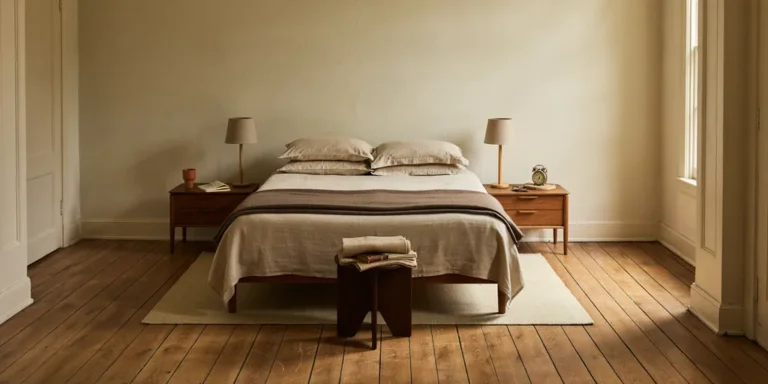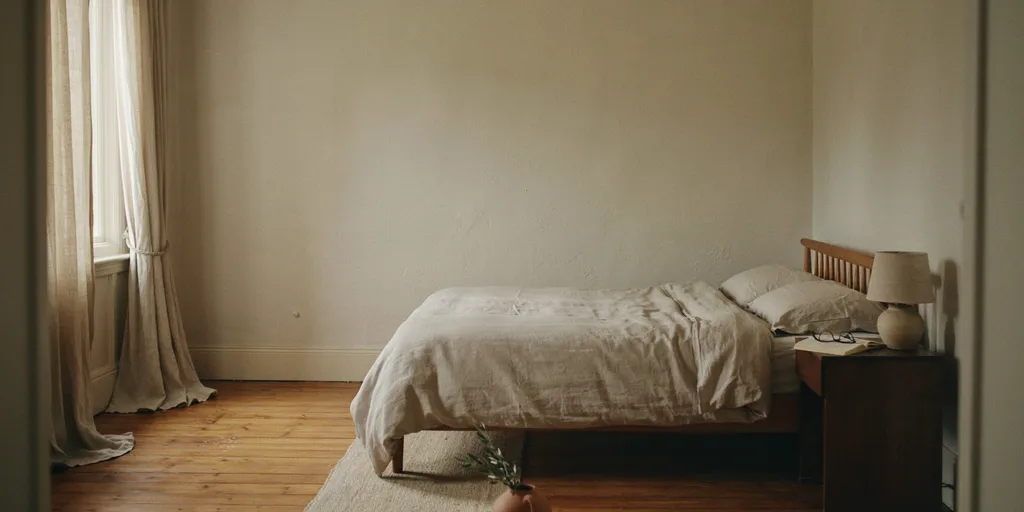
15 Calm Bedroom Ideas Built From Few, Good Things
Most calm bedroom ideas start with a room that is already empty. For a long time ours was the room that got whatever was left over. The chair that did not work downstairs, the lamp from the old flat, the boxes that had nowhere else. It was not untidy. It was just made of leftovers, and it never felt like a place you would choose to be at nine in the evening.
Calm in a bedroom is not a style. It is mostly an absence – of things that ask something of you, of light you cannot turn down, of surfaces that collect. The list below is what we removed, and the handful of things we added back on purpose.
Calm Bedroom Ideas That Begin With Subtraction
Before any of the decorating decisions, there is one that matters more: what the room is for. A bedroom that is also a home office, a laundry room and a place to store suitcases will not feel calm regardless of the color on the walls. Most of what follows is about protecting the room’s one job.
1. Take the work out
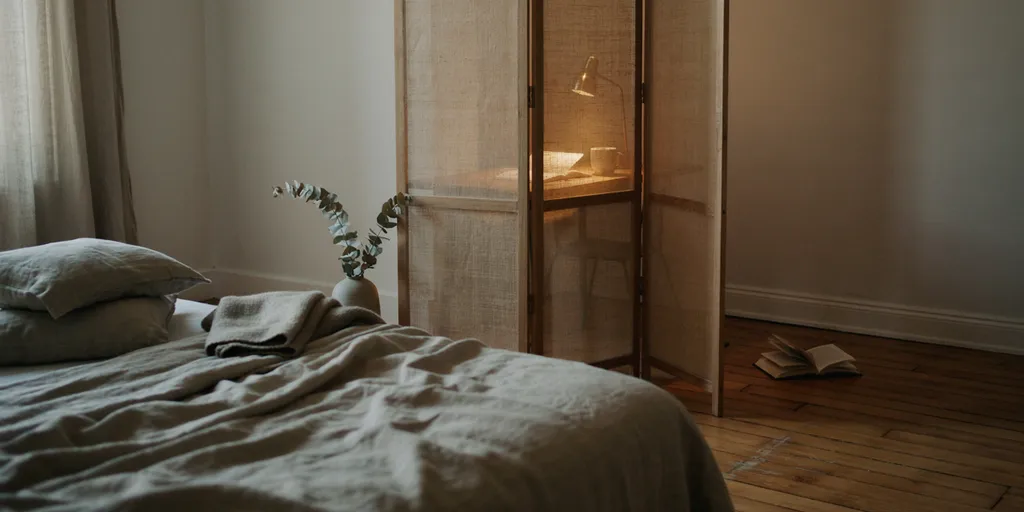
The laptop, the paperwork, the exercise bike. If the room genuinely has to hold them, a closet door or a folding screen between you and them at night does most of the work. What you can see when you lie down is the room.
2. Two light levels, both low
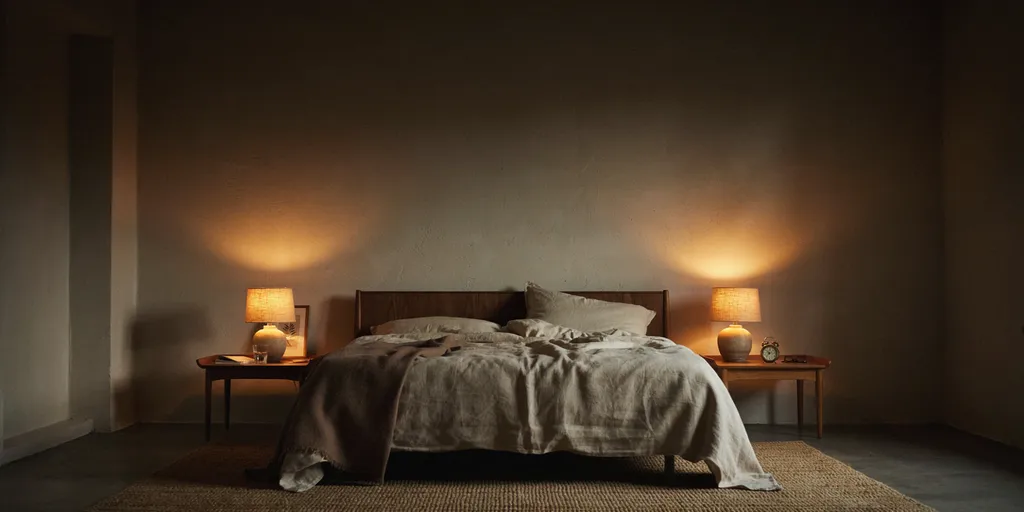
One lamp each side of the bed, warm, and nothing on the ceiling after dark. If you only change one thing in the room, change the bulbs – 2700K or lower, and dimmable if the fittings allow it. Cool white light in a bedroom is the single most common reason a room that looks calm does not feel calm.
3. Let the bed be the only pattern
Or let it be the only plain thing. Either works. What does not work is pattern on the bed, the curtains and the rug, all different, all competing for the same attention.
4. Fewer materials, repeated
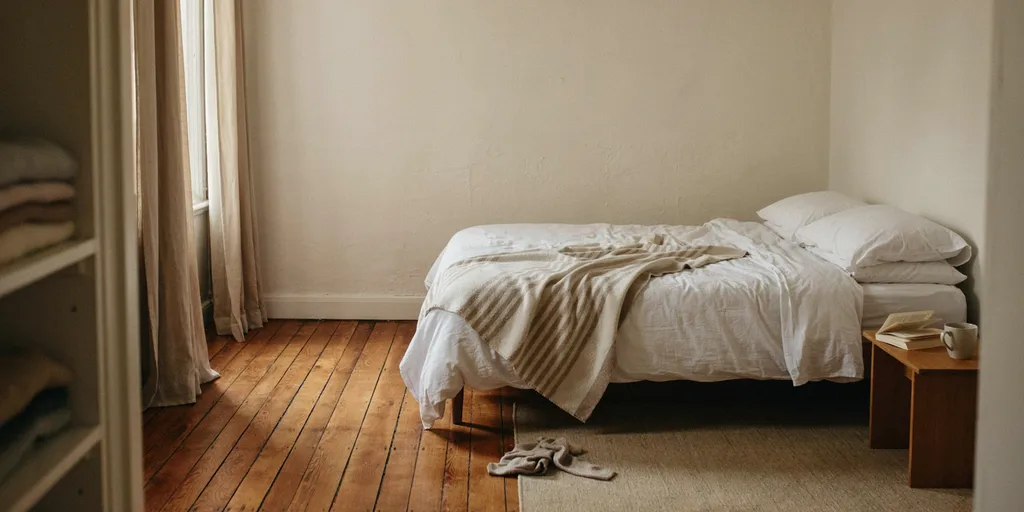
Linen, wood, wool. Three, and each one shows up more than once. We went into why this works in the case for fewer, better materials, but the short version is that repetition reads as intent and variety reads as accident.
5. Nothing under the bed
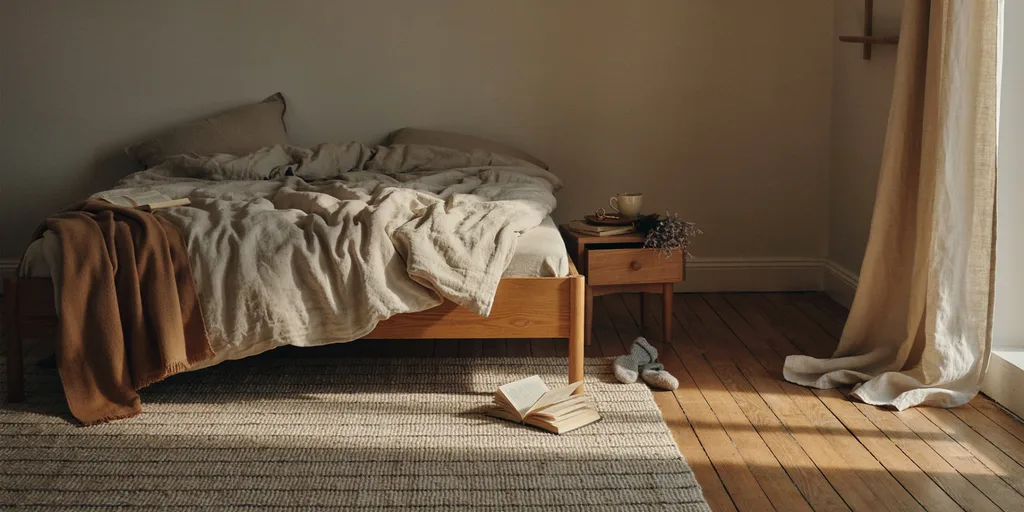
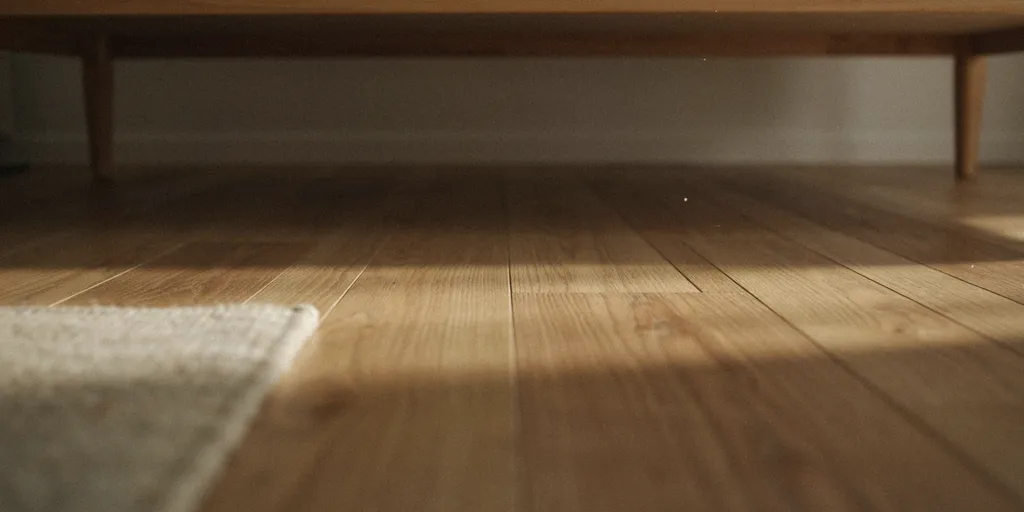
Not boxes, not suitcases, not the vacuum. You will not see it and you will still know it is there. A bed you can see the floor under is the bedroom equivalent of a clear surface.
6. One chair, and sit in it
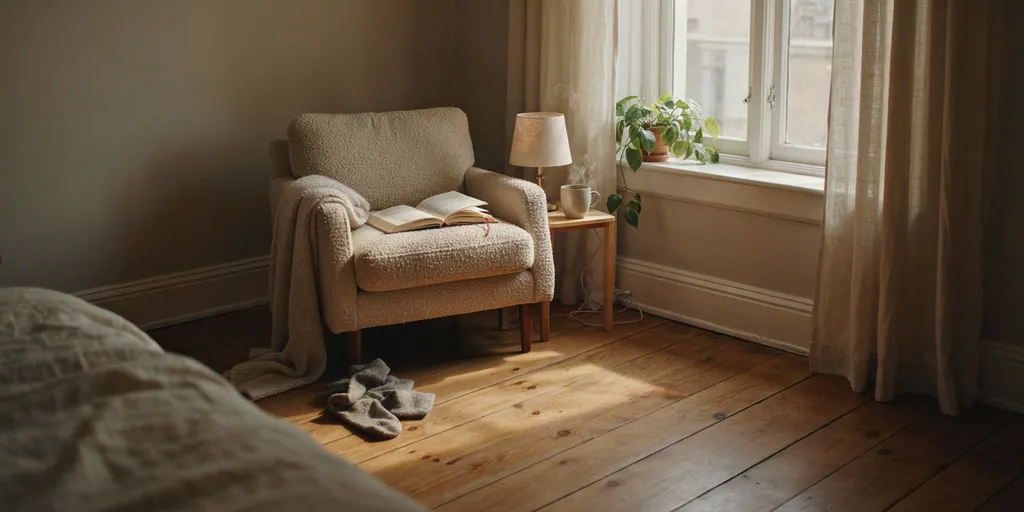
Every bedroom chair becomes a clothes rack unless it has a reason to exist. Put it somewhere you would actually sit – by a window, near a lamp – and it stays a chair. Put it in the corner by the closet and it will be wearing three sweaters by Thursday.
7. Curtains that actually block light
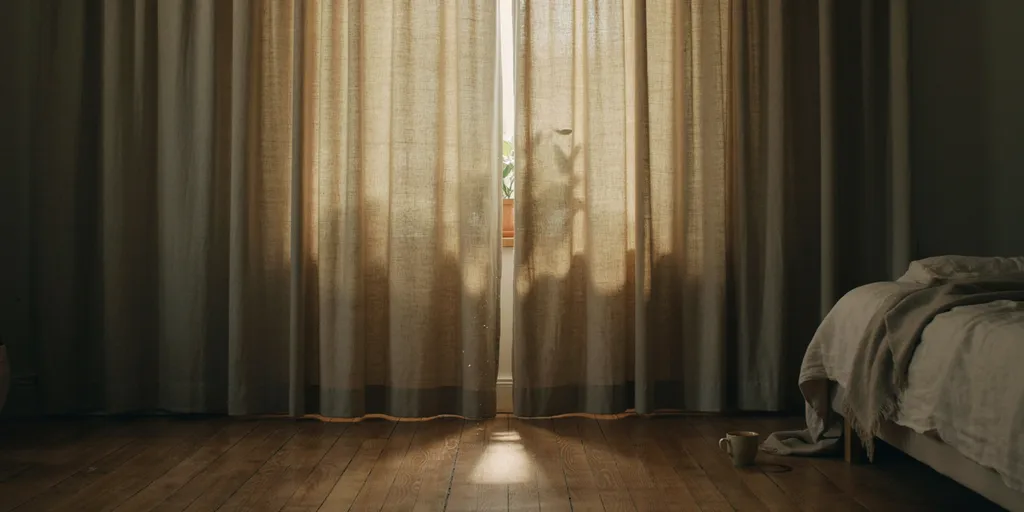
Lined, or with a blind behind them. Half-measures mean waking with the room at an awkward half-brightness, which is worse than either dark or light. This is the one place in the house we would spend money on fabric.
8. Keep the walls quiet above the bed
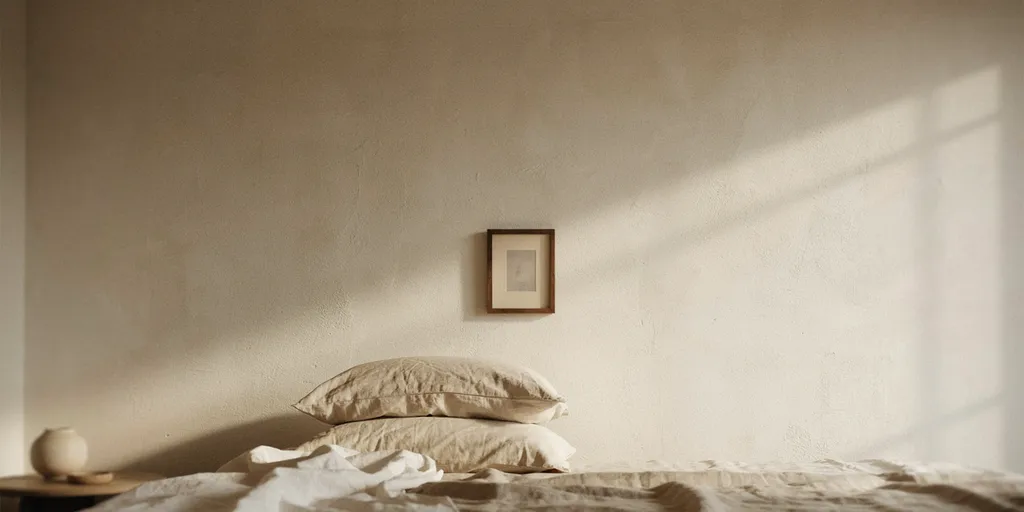
One thing, or nothing. The wall behind the bed is the one you never look at and the one everyone else sees first, which is why it collects gallery walls. In practice a single piece, hung lower than you think, or a bare wall, is what the room wants.
9. Warm neutrals rather than gray
Gray bedrooms photograph well and feel cold at seven in the morning in February. Something with a bit of clay, sand or unbleached linen in it holds low light much better. There is more on the difference in our notes on neutral bedroom decor.

10. A rug you step onto, not one you look at
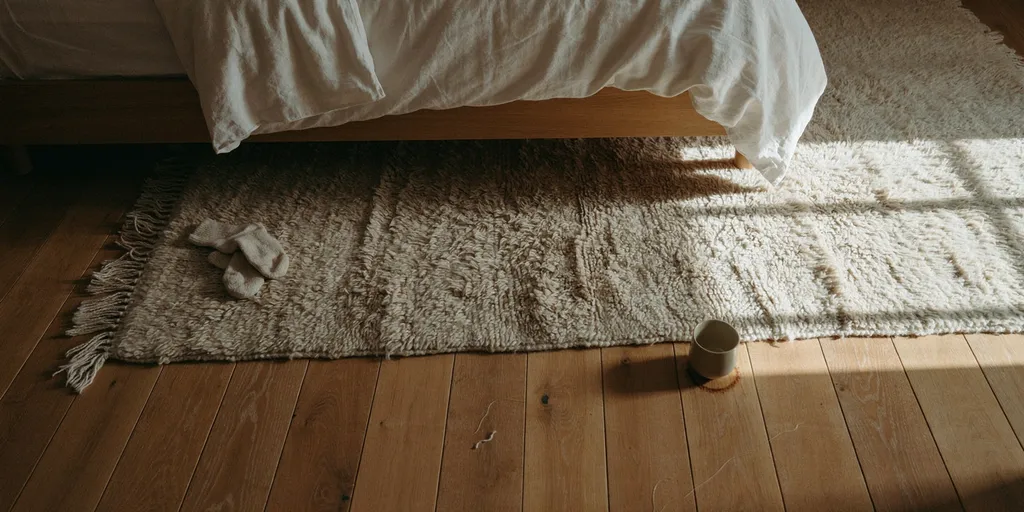
Big enough that both feet land on it when you get out of bed. Wool, or something with some weight. A small rug floating in the middle of the floor gives you the look of a rug and none of the point of one.
11. Put the phone somewhere with a lid
A drawer, a box, the other room. Not face down on the nightstand, where it still owns the corner of your eye. This is a decorating decision as much as a habit one – it decides what the surface next to your head is for.
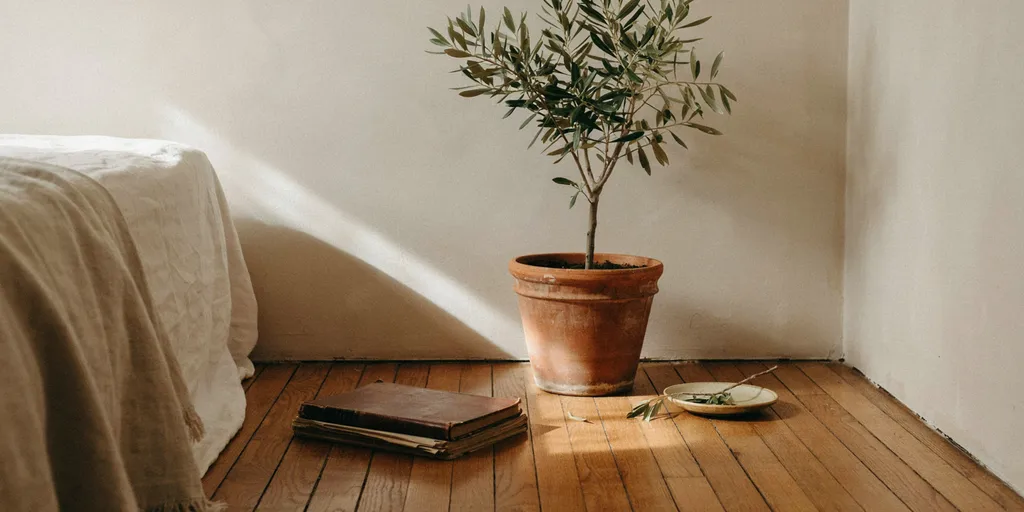
12. One plant, and a real one
Bedrooms do not need a jungle. One plant that is doing well, in a pot heavy enough to look settled, is enough green. Three struggling ones read as maintenance.
13. Leave the nightstand almost empty
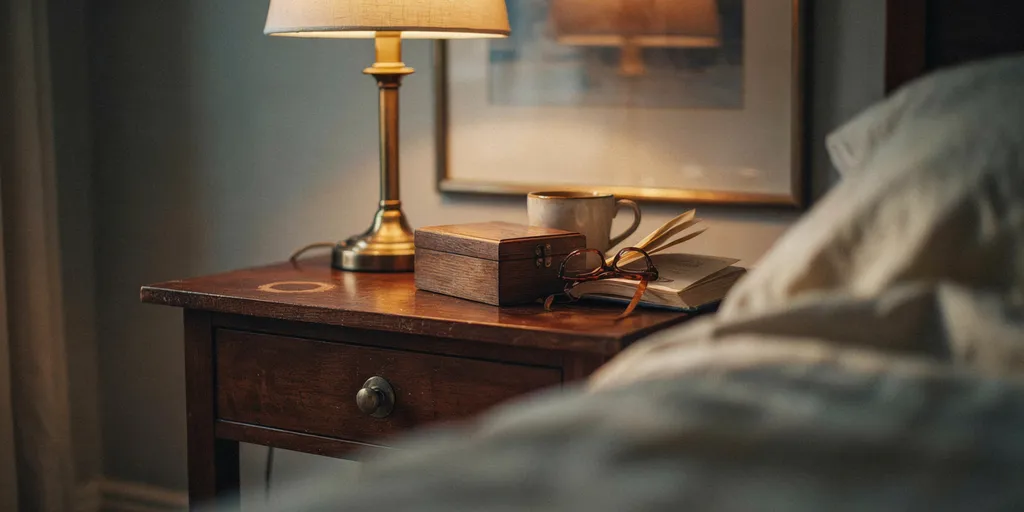
A lamp, a book, a glass. That is the whole brief. Everything else that ends up there has somewhere better to be, and a nightstand is the fastest surface in the house to lose.

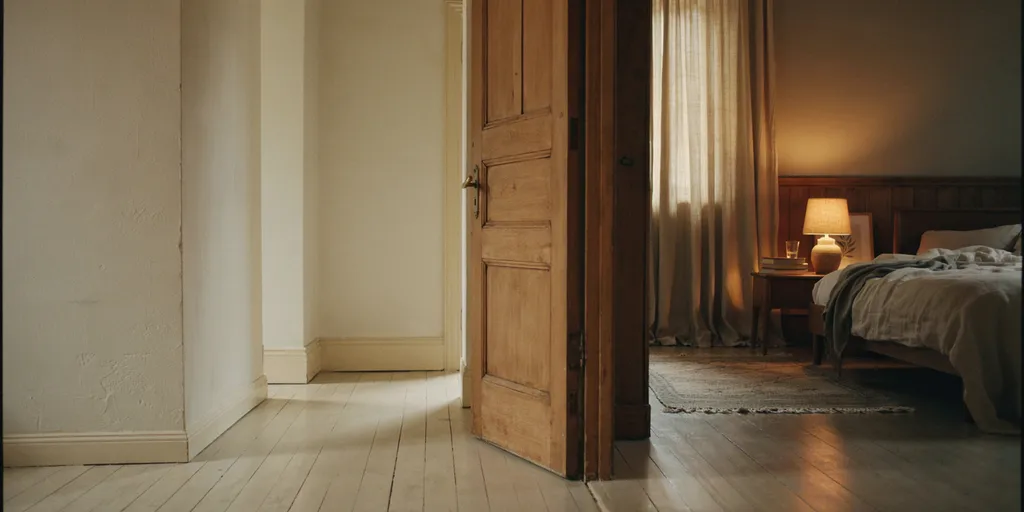
14. Let the room be slightly darker than the rest of the flat
Deeper wall color, lower light, heavier textiles. A bedroom that matches the brightness of the kitchen is a bedroom you do not wind down in. The change of level as you walk in is part of what makes it feel like a different kind of room.
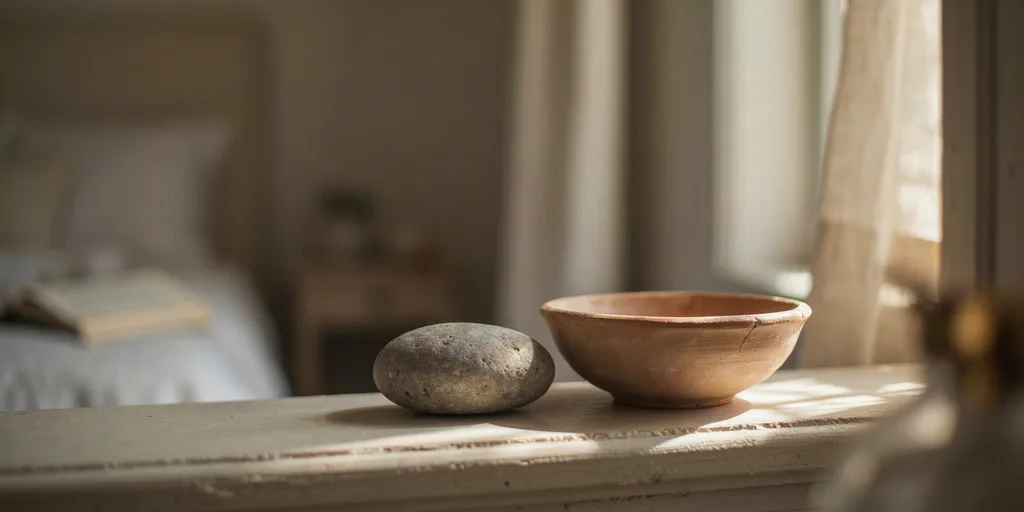
15. Keep one thing that is not useful
A picture that means something, a bowl you like the shape of, a stone from somewhere. A bedroom stripped to pure function is not calm, it is bare. One object with no job is what stops the room feeling like a hotel.
What We Would Skip
Scented candles as a decorating strategy. Mirrored furniture. Matching bedroom sets, which give you five pieces of the same wood and no reason for any of them. Headboards with storage in them.
And upholstered ottomans at the end of the bed, which exist entirely to hold the cushions you take off the bed at night.
Questions We Get Asked
What makes a bedroom feel calm?
Low, warm light and a small number of materials, repeated. Most rooms that feel restless have the two problems together: overhead lighting that is either on or off, and five or six different materials with nothing in common. Fixing the light is faster and usually enough on its own.
What colors work best in a calm bedroom?
Warm neutrals – clay, sand, oat, unbleached linen – or a single deep color used top to bottom. What matters more than the color is the number of them. Two, plus whatever the wood and textiles bring, is plenty.
Should a bedroom be minimal?
Not necessarily. A room can hold quite a lot and still feel calm if the things in it belong to the same few families. What breaks the feeling is variety, not quantity, and surfaces that collect things that have nowhere else to go.
How do you make a bedroom calm when it is also an office?
Give the work a boundary you can close – a closet, a screen, a cloth over the monitor. It sounds slight and it is not: the difference between seeing the desk and not seeing it from the bed is most of the difference in how the room feels at night.
Where should I start?
Bulbs, then the nightstand, then under the bed. All three are free, all three take an evening, and together they usually settle the room enough that you can tell what else it actually needs.