Neutral Christmas Decor: 8 Ways to Keep December Calm
Most Christmas decorating fails in the same way. Every box comes out, every surface gets something, and by the second week of December the room looks busy and feels smaller than it is. In a neutral room the effect is worse, because red and gold fight with oat linen and warm plaster instead of sitting next to them.
Neutral Christmas decor works the other way around. You keep the palette the room already has and let a few seasonal materials carry the mood: evergreen, candlelight, wool, paper and wood. Nothing on this list needs a new color scheme, and most of it goes back into one box in January.
Neutral Christmas Decor Starts With What the Room Already Has
Before adding anything, look at the room’s existing palette. Most neutral rooms sit somewhere between warm white, oat, walnut and clay. Seasonal pieces should fall inside that range. Cream ornaments, raw wood, brown paper, brass and green branches all do. Glitter, bright red and cool silver usually don’t.
The second rule is quantity. Pick three or four places in the room and decorate those properly. The rest of the room stays as it is, and that restraint is what makes the decorated spots look intentional.
1. Let greenery do the color
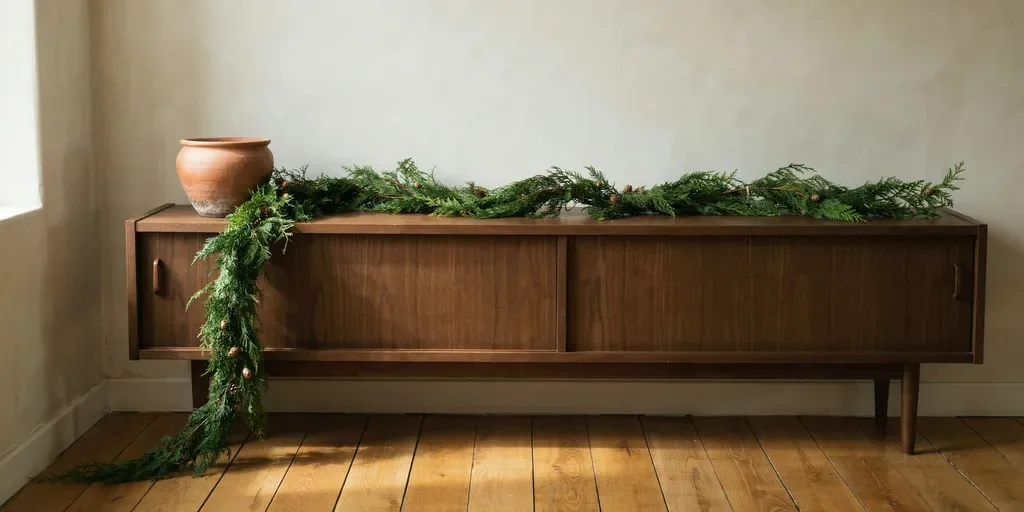
If a neutral room needs one color for Christmas, let it be green, and let it come from real branches. A fresh cedar or pine garland along a sideboard, a mantel or the top of a bookshelf gives more Christmas than any painted ornament. Let the ends hang down unevenly. A garland that stops neatly at both edges looks like it came out of a box.
Fresh cedar lasts about two to three weeks indoors if it stays away from radiators. Mist it every few days. Faux garland is fine too, as long as it’s a darker, varied green rather than one flat shade.
2. Dress the tree in one tone

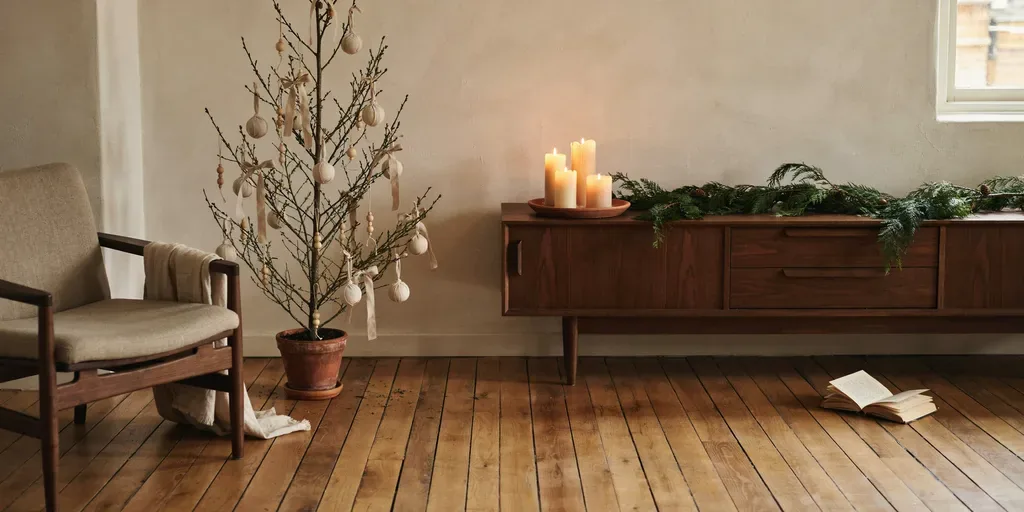
A tree with ornaments in one color family reads calm even when it’s full. Cream works best in warm rooms: cream ceramic, raw wood beads, linen bows, white paper stars. Mixing three materials in one color gives the tree depth without adding noise.
Use warm white lights, not cool white. Cool LEDs turn cream ornaments grey. A linen tree skirt or a woven basket around the stand finishes it better than a printed skirt.
3. Paper stars in the window
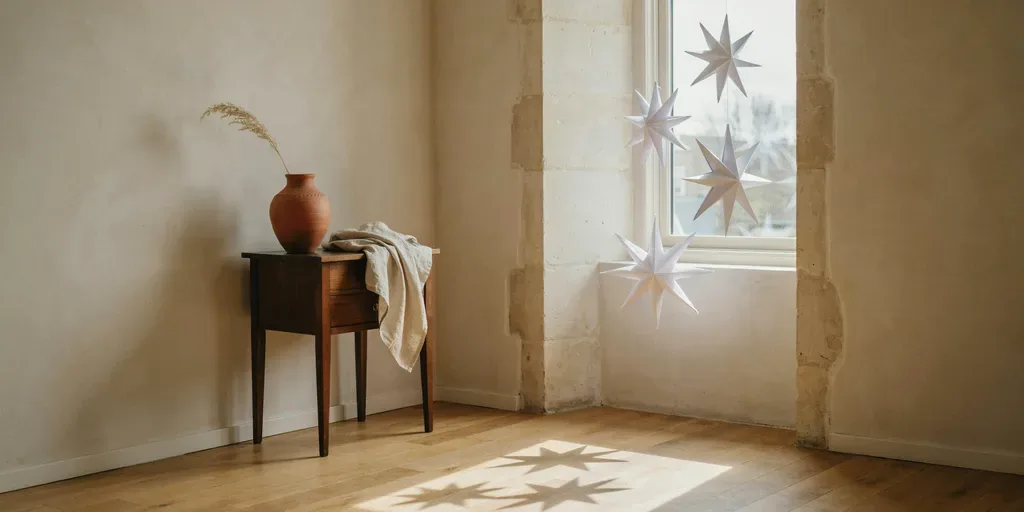
Paper stars cost very little and do a lot in a window, because they catch daylight in the afternoon and lamp light in the evening. Hang three at different heights on thin thread. A single large one also works in a narrow window.
White or kraft paper keeps them inside the palette. If you want light behind them, battery tea lights inside paper lanterns are safer than a cord running across the window frame.
4. Candles in a cluster, not a row
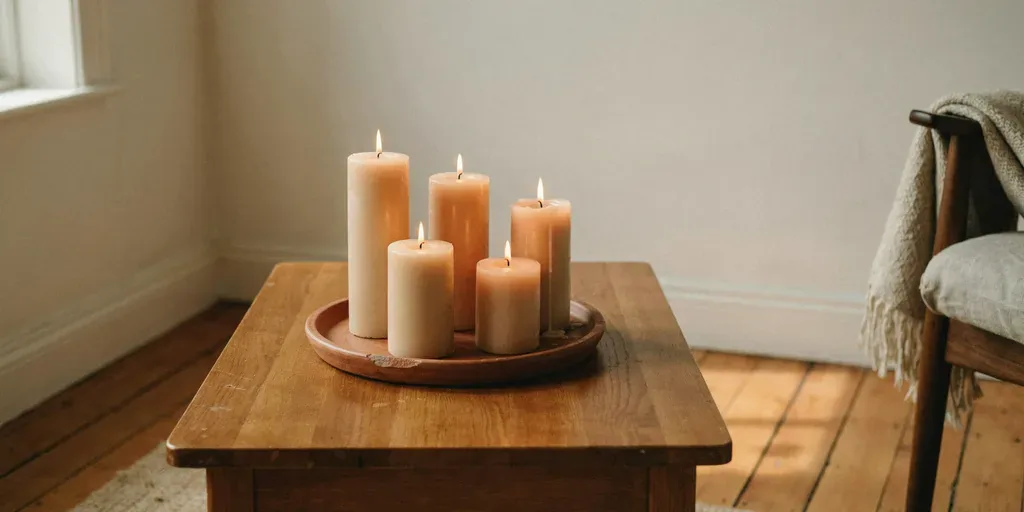
Five candles in a row look like a shop display. Five candles grouped on a tray look like someone lives there. Choose different heights, all in cream or ivory, and set them on a clay, wooden or stone tray so wax drips have somewhere to land.
Unscented candles are easier in a living room, especially if the room already has fresh greenery. Never leave them burning when you leave the room, and keep them well clear of garlands.
5. Swap textiles, not furniture

The quickest seasonal change in a neutral room is texture. Swap two or three pillow covers for wool, boucle or a muted plaid, and put a chunky knit throw over the sofa arm. The colors stay the same; the room still feels like winter.
Covers are cheaper and easier to store than new pillows. In January the covers go into the same box as the ornaments.
6. Branches instead of a second tree
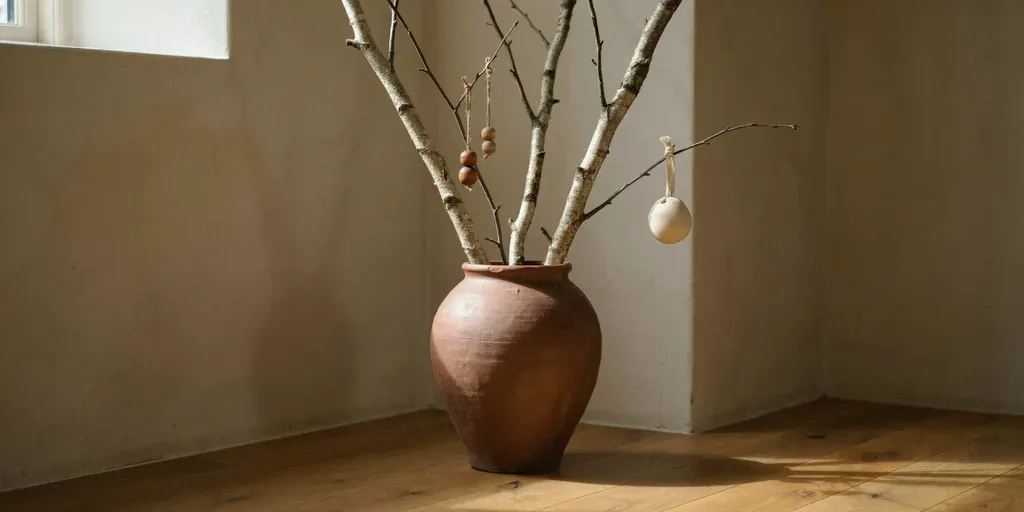
Small apartments often have room for one tree at most. Branches in a tall floor jug fill a second corner without taking up floor space. Birch, willow or any bare branch from the yard works. Hang a few wooden beads or one or two cream ornaments on them and stop there.
The jug needs weight at the bottom. A handful of stones or sand keeps tall branches from tipping it over.
7. Dried oranges and raw wood
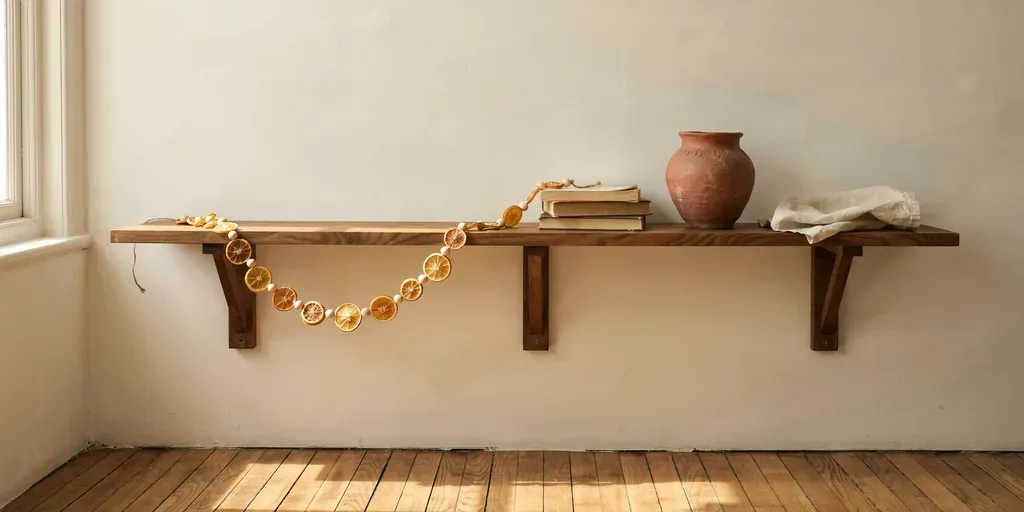
Dried orange slices add a warm amber that sits easily next to walnut and clay. Strung with raw wooden beads, they make a garland for a shelf or a window. They’re also one of the few decorations that smell faintly of Christmas without a candle.
Slice oranges about a quarter inch thick, blot them dry and dry them on a rack in the oven at around 200°F for three to four hours, turning them every hour. Stored in a dry box, they keep for several years.
8. Wrap gifts in brown paper

Gifts under the tree are part of the decor for weeks. Brown kraft paper with cotton twine and a sprig of cedar looks warmer than printed paper and fits a neutral room. One roll of kraft paper covers most of a household’s gifts and costs less than three rolls of patterned paper.
How Much It Costs
A neutral Christmas doesn’t need to be expensive, and most of the cost is one-time. A rough budget for a living room, at typical US prices:
| Item | Rough cost | Lasts |
|---|---|---|
| Fresh cedar garland, 9 feet | $30 to $60 | one season |
| Cream and wood ornaments, about 30 | $40 to $80 | many years |
| Warm white lights for a 6-foot tree | $20 to $40 | several years |
| Five pillar candles | $20 to $35 | one season |
| Two wool or plaid pillow covers | $30 to $60 | many years |
| Roll of kraft paper and twine | $10 to $15 | one or two seasons |
The ornaments, lights and covers are bought once. After the first year, a neutral Christmas costs little more than the garland and candles. Branches from outside, dried oranges and paper stars cost almost nothing at all.
What We Would Skip
Tinsel and glitter. They don’t fit a warm palette and they turn up in rugs until March.
Themed sets in red and gold. If the room is built on oat, walnut and clay, a full red-and-gold scheme reads as a different room for a month.
Decorating every surface. Three or four places done properly look better than twelve places with one thing each.
Cool white lights. They make cream ornaments and warm walls look grey.
Where We Would Start
One fresh garland, one tree or a jug of branches, and a cluster of candles. That’s enough for most living rooms. Add the textile swap if the room still feels too much like October.
If your space is small, the ideas in our guide to small apartment decorating still apply in December: fewer pieces, placed where you see them. And if the room’s base is already warm neutral, most of this list will sit in it without any adjustment.
Questions We Get Asked
How do you make neutral Christmas decor not look boring?
Use texture and real greenery. Wool, linen, raw wood, paper and fresh cedar give a neutral room variety without adding color. Candlelight in the evening does the rest.
What colors go with neutral Christmas decor?
Cream, ivory, oat, walnut brown, kraft brown, brass and evergreen. A touch of dried orange amber works well too. Bright red, cool silver and glitter usually clash with warm neutrals.
Can you have a neutral Christmas tree with colored lights?
You can, but warm white lights keep cream and wood ornaments looking warm. Colored lights pull the eye away from the ornaments and change the whole room at night.
How long does a fresh cedar garland last indoors?
Usually two to three weeks, a little longer away from heat. Mist it every few days and keep it off radiators and out of direct sun.
What is the cheapest way to decorate for Christmas in a neutral style?
Branches from outside, a roll of kraft paper, a few paper stars and candles you already have. Dried orange slices cost a few oranges and an afternoon in a low oven.
Should Christmas decor match the rest of the room?
In a neutral room, yes. Decor that stays inside the room’s palette looks intentional and is easier to live with for a month.
Should a neutral Christmas tree be real or artificial?
Either works. A real tree adds scent and an uneven natural shape. A good artificial tree with varied green tones lasts for years and doesn’t drop needles. Avoid very uniform, bright green artificial trees in a neutral room.