12 Small Living Room Ideas That Don’t Rely on Buying More
Our living room is about 150 square feet with a door on two walls and a radiator under the window. For the first year, every one of the small living room ideas we tried involved buying something – something that folded, something that stacked, something that did two jobs. None of it helped. The room got better when we stopped adding and started moving what was already there.
Everything below can be done on a Saturday with the things you own. A few of them cost the price of a curtain rod. None of them require a bigger room.
Small Living Room Ideas That Start With Moving, Not Buying
The habit in a small room is to push everything flat against the walls, on the theory that it leaves more floor. It does leave more floor, in a shape nobody uses. Most of these ideas are about undoing that.
1. Start by moving one thing away from the wall
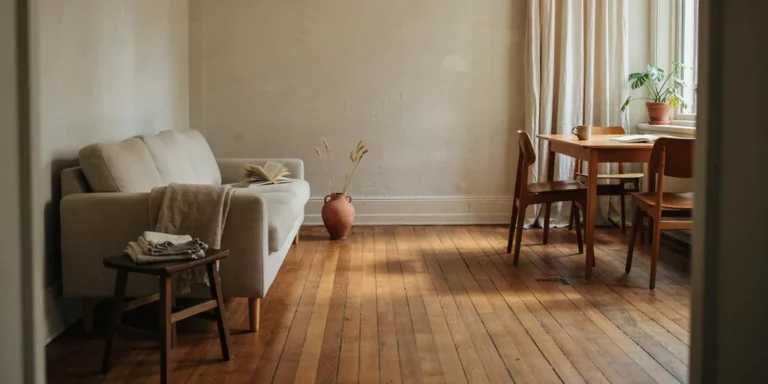
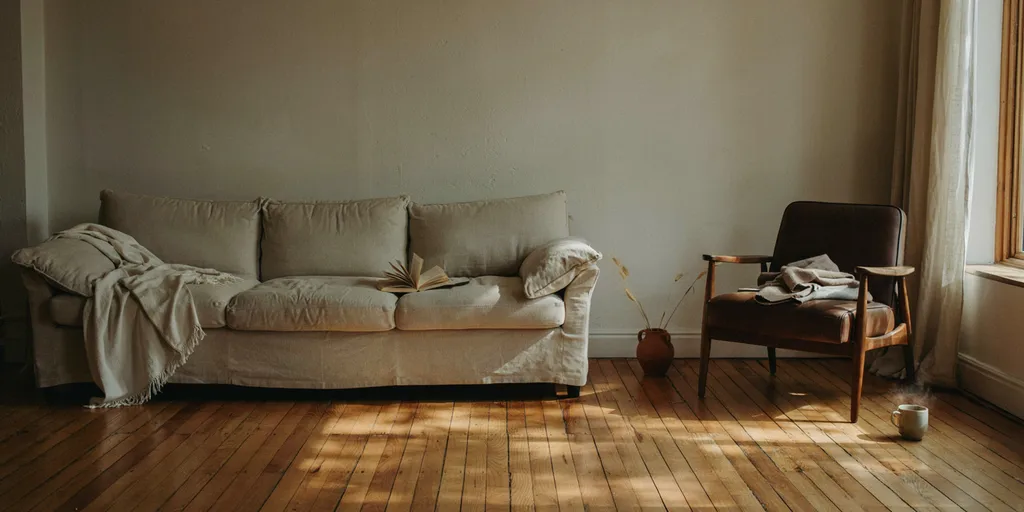
Pull the sofa forward by four inches. Turn the armchair in from the corner. The gap behind is barely visible and the room stops looking like a waiting area. It is the smallest change on this list and it is the one we would do first.
2. Let one corner stay empty
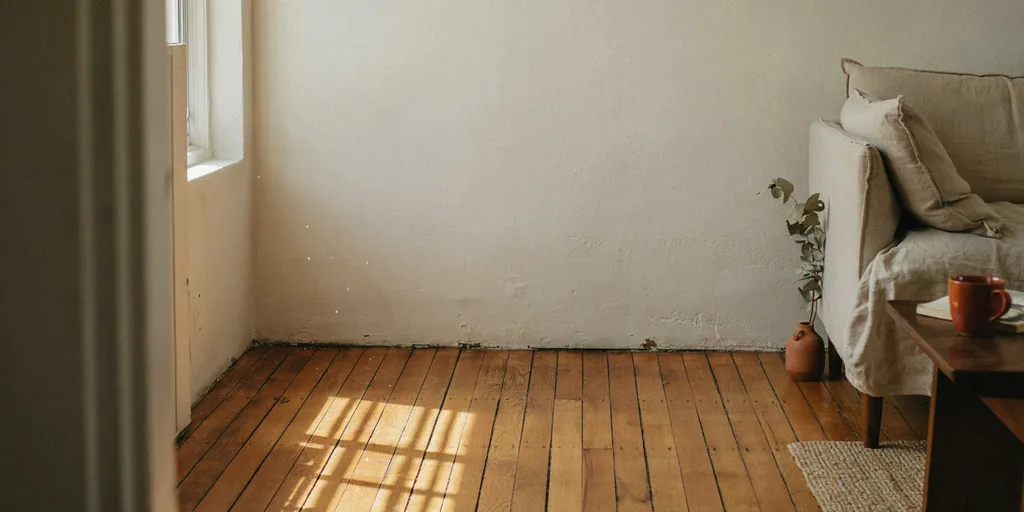
Not a lamp, not a plant, not a basket. A small room needs one place where nothing is happening, and a corner is the cheapest one to give up. The room will feel less full with the same number of objects in it.
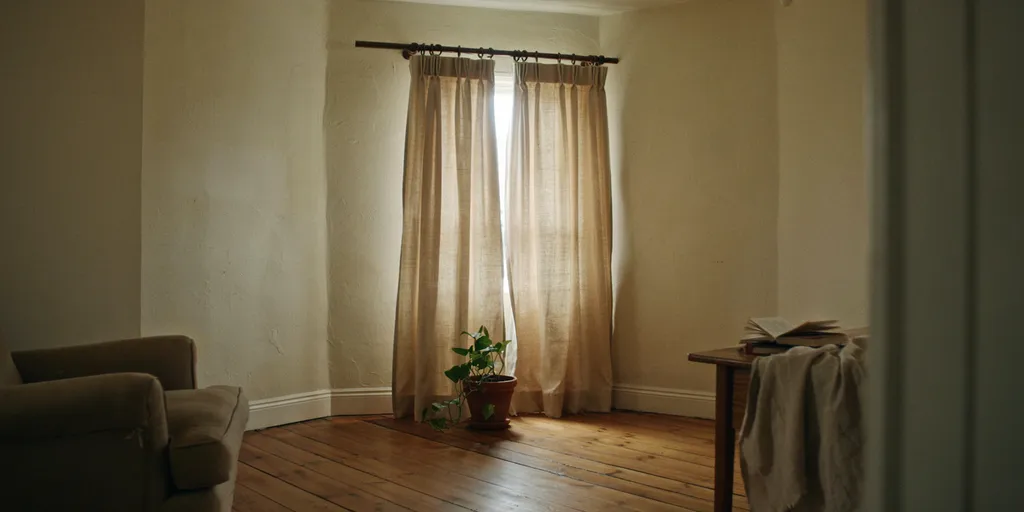
3. Hang the curtains higher than the window
Rod as close to the ceiling as the fitting allows, fabric to the floor. The eye reads the whole height as window. It costs an hour and it changes the proportions of the room more than paint does.
4. Keep the floor visible
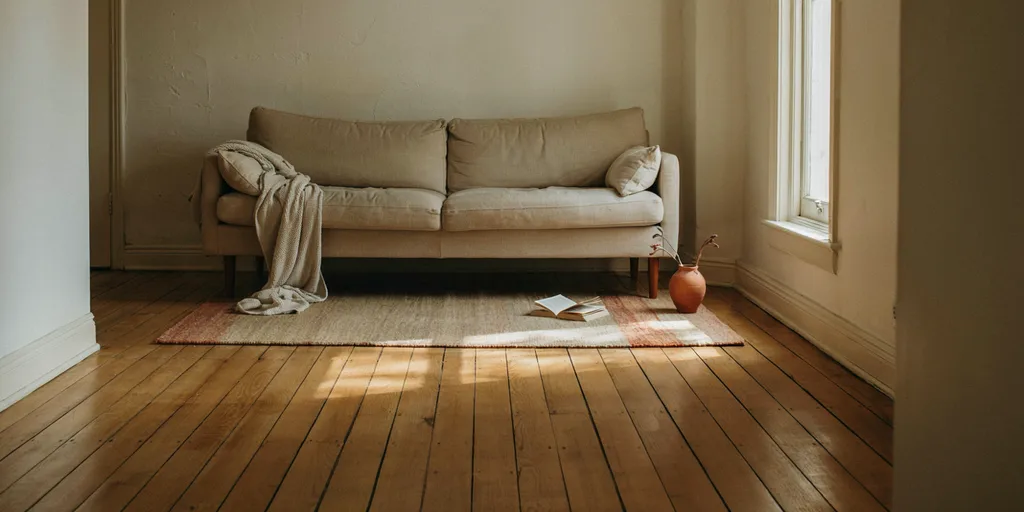
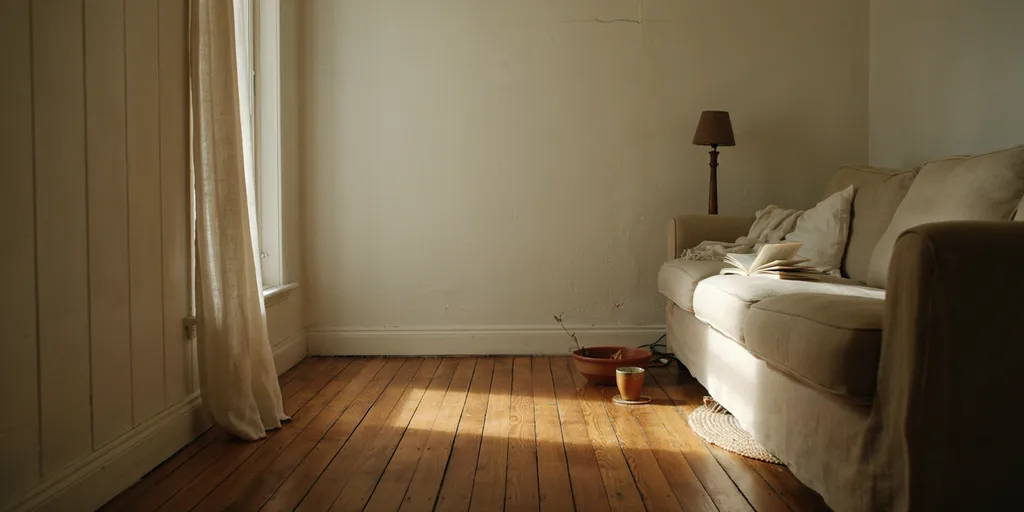
Furniture on legs, nothing stored under the sofa, and the rug placed so a border of floor shows all the way round. Continuous floor is what the eye uses to judge the size of a room, and blocking it is what makes small rooms feel blocked.
5. Choose one color and let it repeat
A small room does not have space for a scheme. Pick one color that is not a neutral – a green, a rust, a muted blue – and let it appear three times, spread apart. Everything else stays quiet. Repetition reads as decision; variety reads as whatever was to hand.

6. Make the rug bigger than feels right
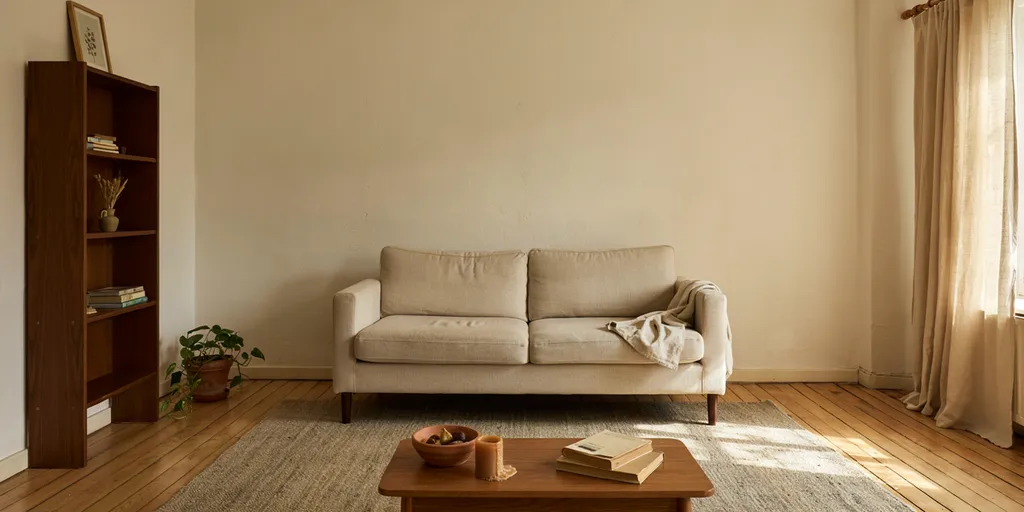
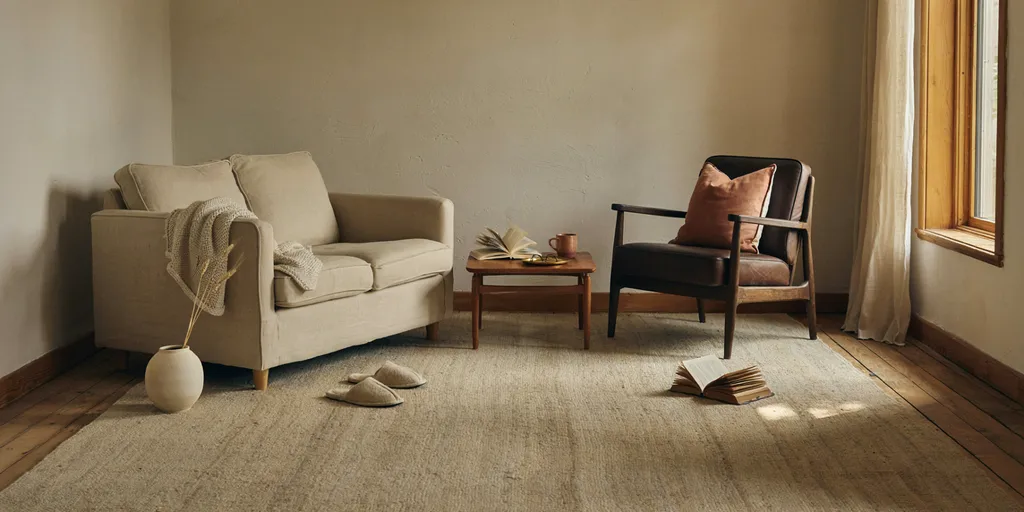
At least the front legs of every seat should land on it. A rug that floats in the middle of the room draws a small square in the middle of an already small floor. A large one pulls the furniture into a group and makes the room read as one space.
7. Give the room one generous piece
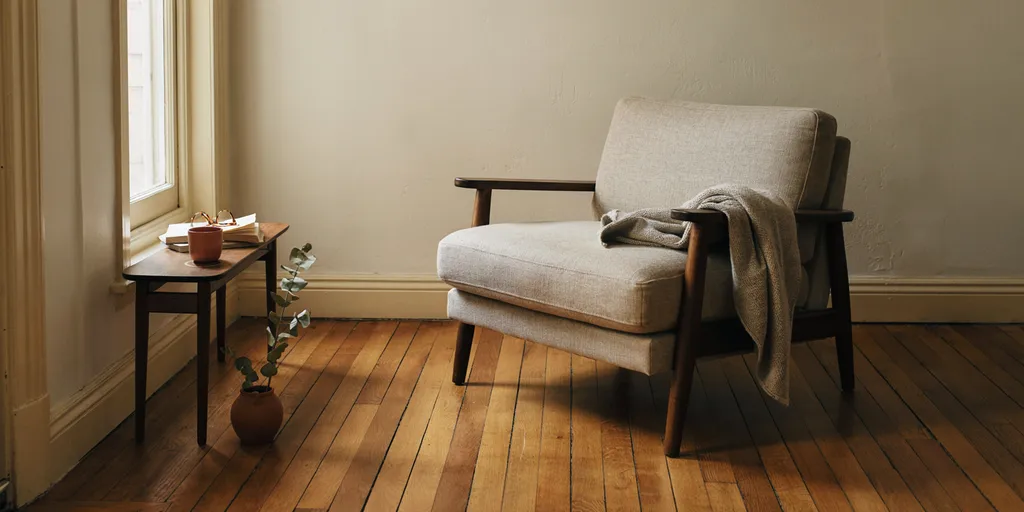
One thing that is properly sized – a real armchair, a large mirror, a tall plant – gives the room a scale. A small room furnished entirely in small pieces looks like a model of a room, and nothing in it feels settled.
8. Light from three low points
The ceiling light flattens everything and makes the walls obvious. Three lamps below eye level, same warmth of bulb in each, and the corners get light while the ceiling stays dark. The edges of the room go soft and the room feels less bounded.
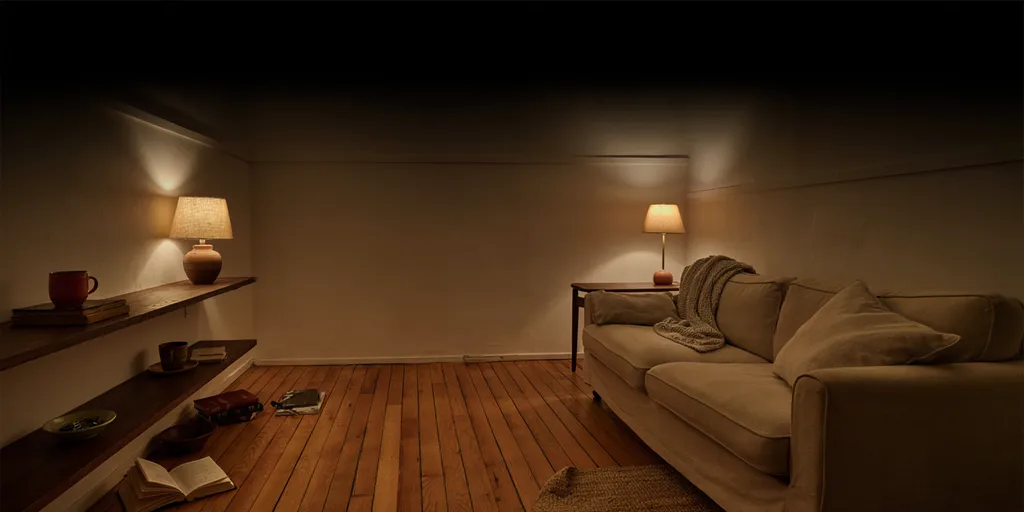
9. Put the storage on one wall only
Height works in a small room, but only in one place. All the shelving on the wall you look at least, and the other walls flat. Shelves on three walls turn a living room into a storeroom with a sofa in it.
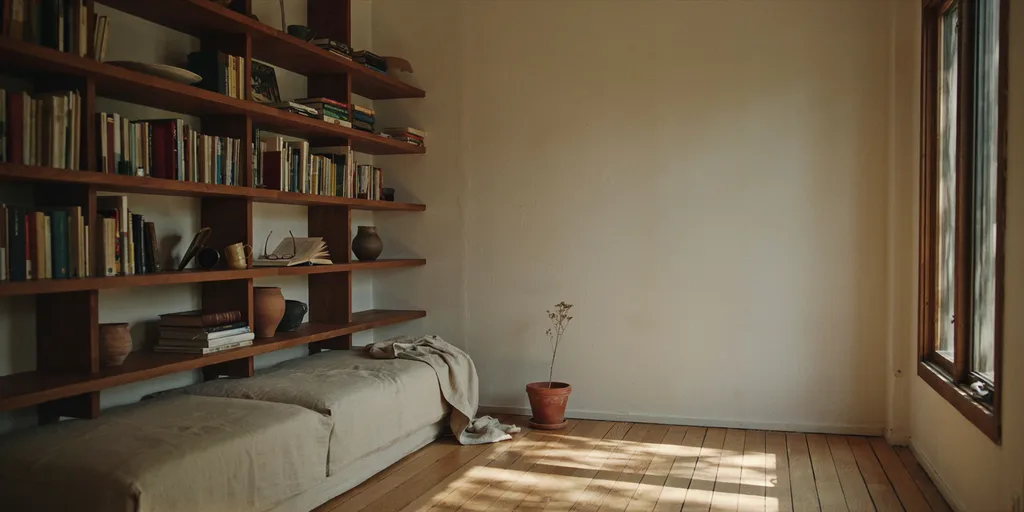
10. Pick furniture by depth, not by width
A sofa six inches shallower than standard gives you back a walkway. A sofa six inches narrower gives you back nothing you will notice. In small rooms depth is the dimension that decides whether you can move.
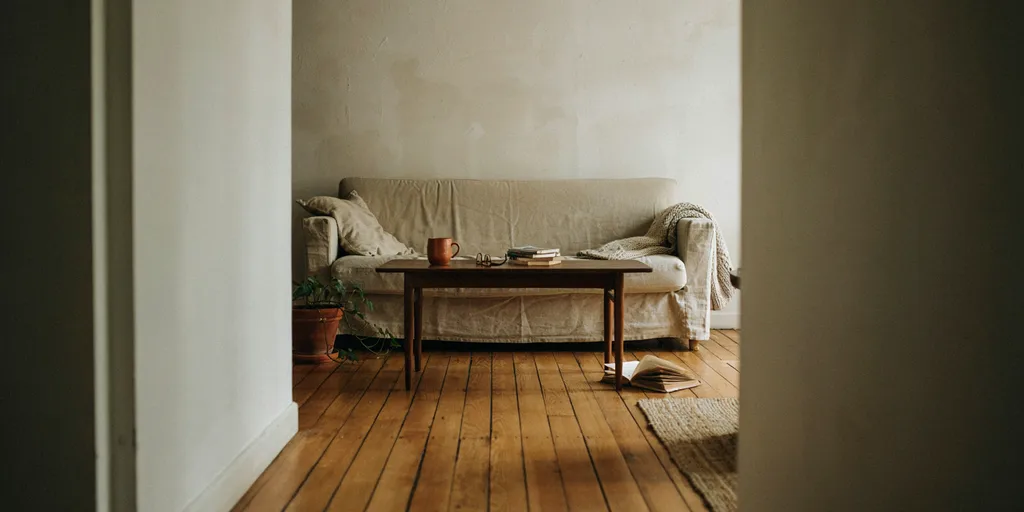
11. Hang art lower and in one group
Center it around seated eye height, not standing. In a room you mostly sit in, art at standing height floats above everything and leaves a band of empty wall underneath. Grouped and low, it belongs to the furniture instead of to the wall.
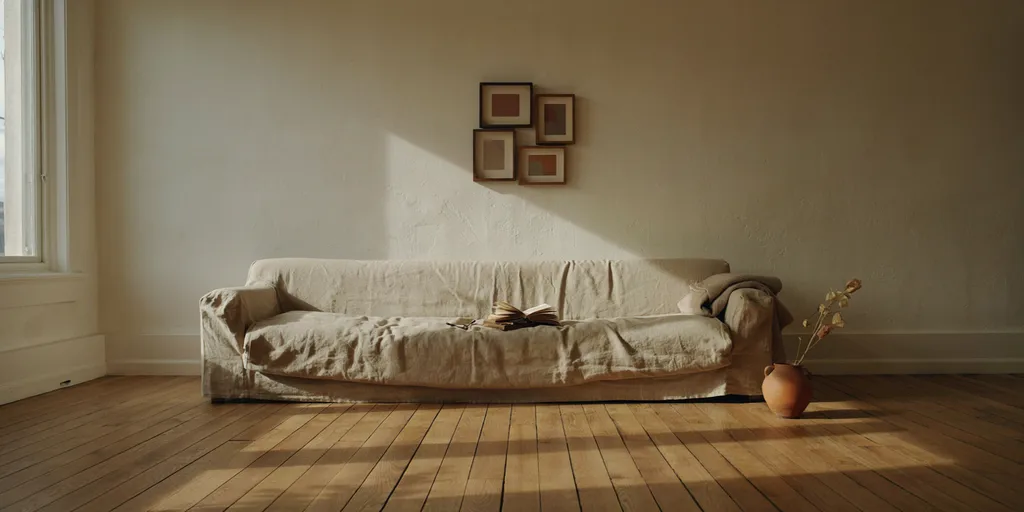
12. Take one thing out and do not replace it
There is always one. The side table nobody uses, the second lamp, the basket of things that have no home. Remove it, leave the space, and see how the room reads after two weeks. Usually it reads better, and that is the point at which a small living room starts to feel like enough.
A Note Before You Start
None of this makes a small room bigger. What it does is stop the room announcing its size – fewer edges, fewer breaks in the floor, fewer lines across the walls, and one place for the eye to rest. A room can be small and still feel finished, and finished is the thing that was actually missing.
If you want to keep going in the same direction, the same thinking applied to a whole apartment is in our small apartment decor notes, and the material side of it is in the case for fewer, better materials.
Questions We Get Asked
How do you make a small living room look bigger?
You mostly do not. What works is making it look continuous – furniture on legs, one floor material, curtains at ceiling height, and a single color running across walls and ceiling without a white break between them. Rooms read as small when they are full of edges, not when they are short of square meters.
Should furniture go against the walls in a small room?
Not flat against them. Pulling seating forward by even four inches, and angling one piece in from a corner, gives the room a middle. Furniture pressed to the walls leaves a floor area in the shape of a corridor, which is the shape nobody sits in.
What size rug works in a small living room?
Bigger than you think – at least large enough that the front legs of the sofa and the chairs stand on it. If the budget only stretches to a small rug, no rug is usually the better choice.
What is the first thing to change?
The curtain height, if the room has curtains. The lighting, if it does not. Both are cheap, both are reversible, and both change how the room feels at the times of day you actually use it.