Neutral Bedroom Decor: What Actually Makes a Room Feel Calm
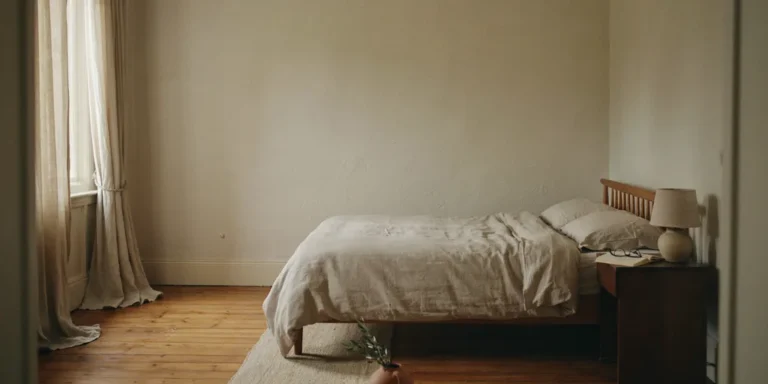
We painted a bedroom gray once because every piece of neutral bedroom decor we had saved was some version of gray. In photographs it was exactly right. In the room, in February, at half past seven in the morning, it was the color of a car park. We repainted it in something with clay in it and changed nothing else, and the room became somewhere you would want to wake up.
That is most of what we have learned about neutral bedroom decor: the color name matters far less than what the color does at the three or four light levels the room actually sees.
What Neutral Bedroom Decor Gets Right and Wrong
A neutral room is not a colorless one. It is a room where the color is carried by materials rather than by paint – the grain of the wood, the weave of the linen, the matt of an unglazed pot. When that goes wrong it is almost always for the same two reasons: the neutrals are cool, and there is nothing in the room with any texture.
Fewer materials, repeated
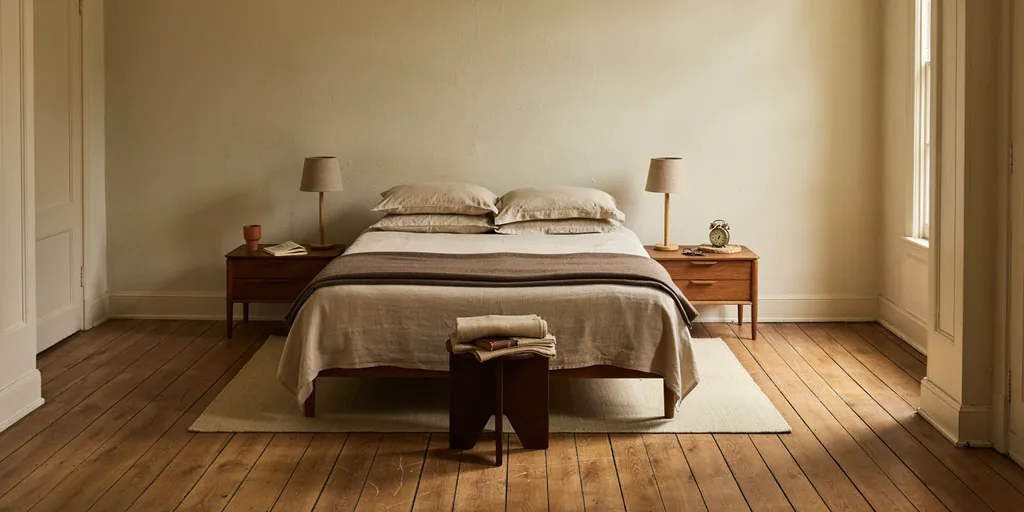
Three is a good number. Linen, wood, wool. Each one appears more than once – the wood in the bed frame and the nightstand, the wool in the rug and the blanket, the linen in the bedding and the curtain. Repetition is what makes a narrow palette look intended rather than unfinished.
A room with eight materials and no color is not neutral. It is just beige and busy.
Choose warm neutrals over gray
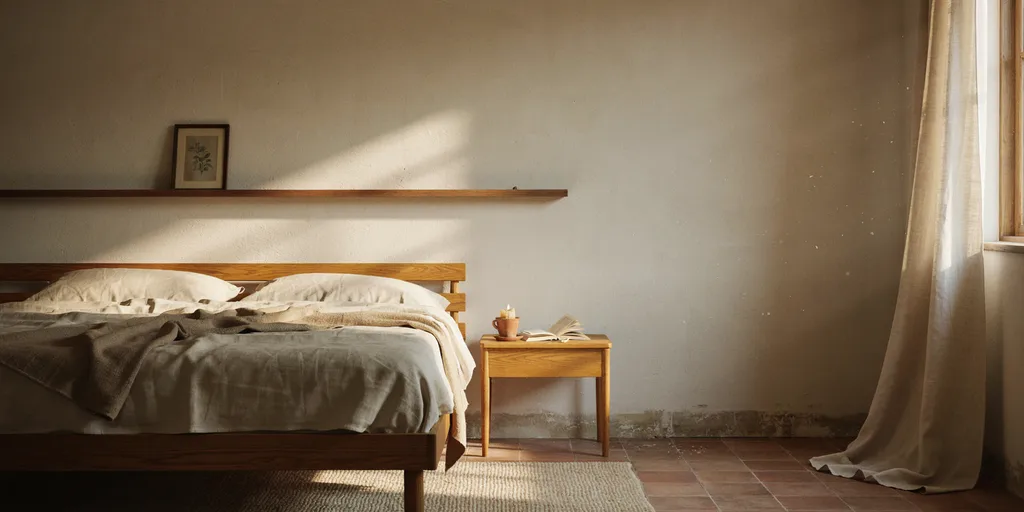
Cool grays need strong daylight to look like anything. Under a lamp at night, and under overcast morning light, they go flat and slightly blue. Neutrals with warmth underneath them – clay, oat, sand, unbleached linen, greige with a pink rather than a green base – hold their character at low light levels, which is when a bedroom is mostly seen.
If you are choosing paint, look at the sample at night with the lamp you actually use, not in the store and not at midday.

Light you can turn down
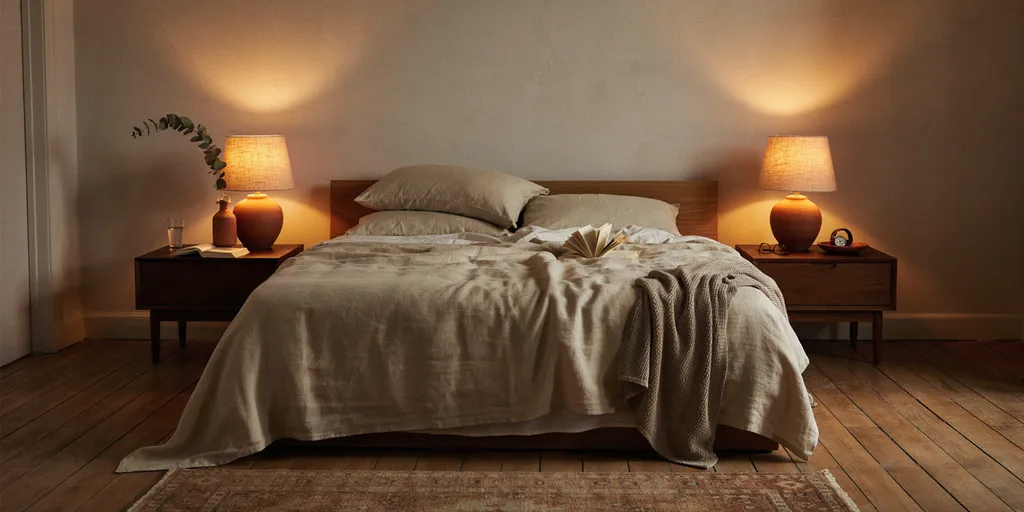
Two lamps, one each side, warm bulbs, and nothing overhead after dark. This does more for a neutral bedroom than the paint does. A carefully chosen neutral under a 4000K ceiling bulb will look like a hospital corridor, and no amount of texture will rescue it.
Match the bulb warmth across every lamp in the room. Two different color temperatures in one small room is something you feel before you notice it.
Texture instead of pattern
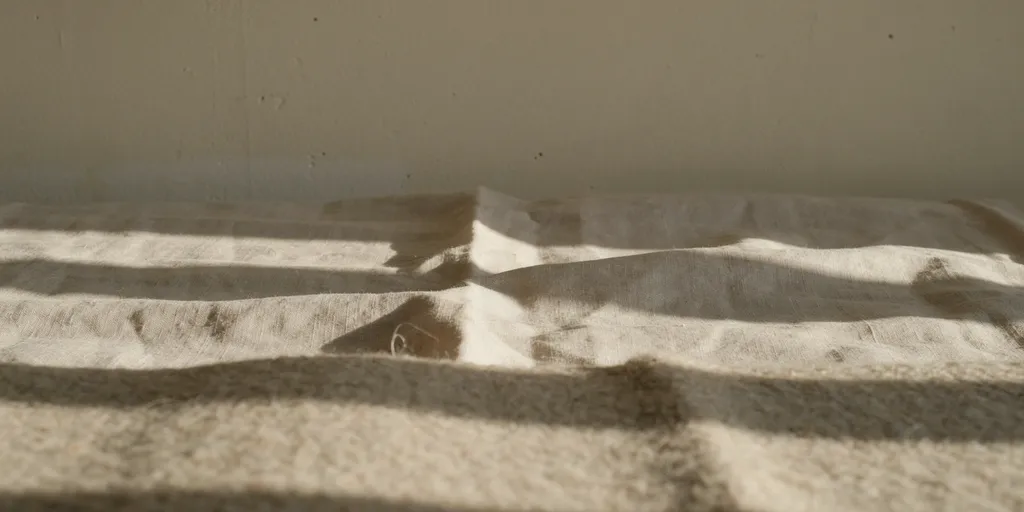
With the color turned down, the interest has to come from the surfaces. Linen that creases. A rug with pile you can see the direction of. Plaster or paint with a matte finish rather than a wipeable sheen. A neutral room with flat surfaces everywhere reads as empty; the same room with three good textures reads as quiet.
Something unfinished
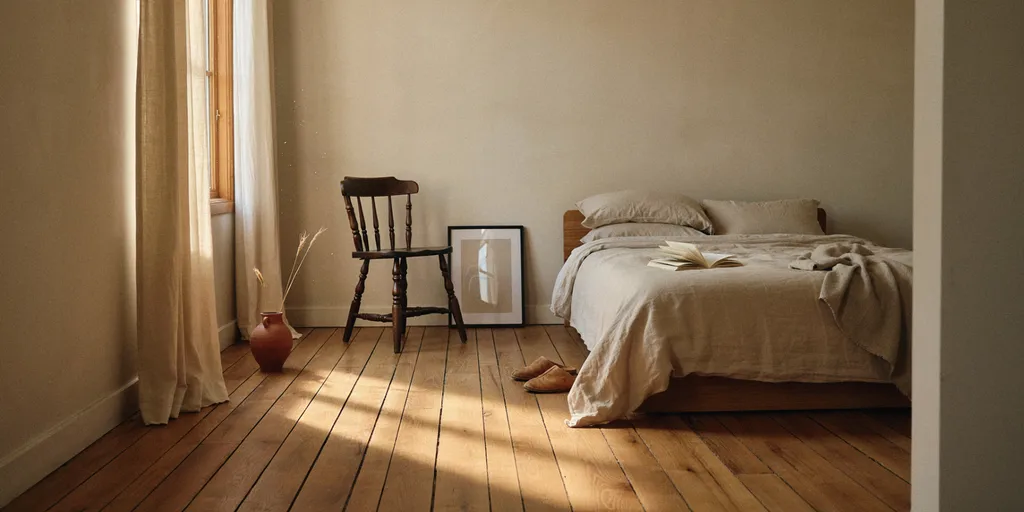
One thing in the room that is not resolved – a chair that does not match, a picture leaning rather than hung, a rug slightly too old. A neutral bedroom executed perfectly looks like accommodation. The imperfect thing is what makes it read as somewhere specific.
Let the wood be visible wood
Not stained to a uniform color, not sealed to a plastic shine. Oiled, or waxed, or just old. In a room with almost no color, the grain of the wood is doing a lot of the decorating, and covering it up removes the one thing that was going to give the room some depth.

Keep the bed the quietest thing
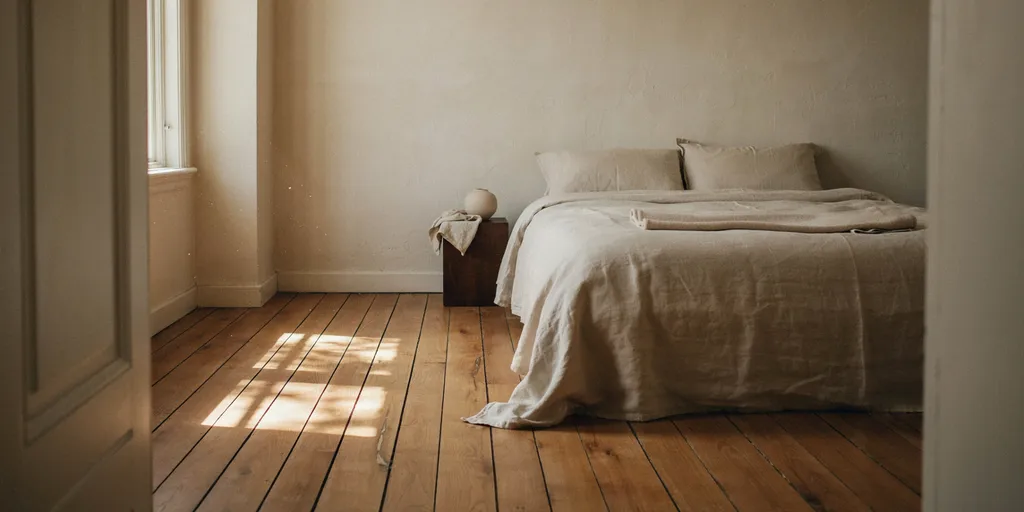
The instinct with neutral bedding is to layer – three cushions, a runner, a throw, all in slightly different off-whites. It photographs well and it is a lot of admin. Two pillows, one blanket, one color family. The bed is the biggest surface in the room and the calmest room is the one where it is not competing with anything.
What We Would Skip
Gray, mostly, unless the room has strong south light. Pure brilliant white on the walls. Bedding sets sold as a complete look, which give you five pieces that match each other and nothing else in the room. Cushions that live on the floor at night.
And the word greige on a paint chart, which covers about forty colors, half of which are green.
Questions We Get Asked
What colors count as neutral for a bedroom?
Anything where the color comes from a natural material rather than a pigment decision – clay, sand, oat, stone, unbleached linen, warm off-whites, and the browns and grays that actual wood and wool come in. What matters more than the list is the undertone: warm neutrals stay themselves at low light, cool ones do not.
Why does my neutral bedroom feel cold?
Usually the bulbs. Warm-white, 2700K or below, in every fitting in the room, and nothing on the ceiling after dark. If that is already the case, the next most likely cause is too many hard, flat surfaces and nothing with texture at the level of the bed.
How many colors should a neutral bedroom have?
Two, plus whatever the wood and textiles bring in on their own. The constraint that matters is on materials rather than colors – three or four, each used more than once.
Is neutral bedroom decor boring?
It can be, and the fix is not to add color. It is to add texture and to let one object be genuinely old or slightly wrong. A neutral room that is boring is usually a room where every surface is smooth and everything arrived in the same year.
Where should I start?
Change the bulbs, then look at the room again before deciding anything else. It costs almost nothing and it changes what every other decision in the room is going to look like. The material side of the same question is in the case for fewer, better materials, and the wider version is in our calm bedroom ideas.