Bedroom Ideas for Small Rooms: 8 Moves That Free Up Floor Space
In a small bedroom the bed takes up most of the floor, and everything else has to fit around it. The usual approach is to buy smaller versions of everything: a smaller nightstand, a smaller dresser, a smaller lamp. The room ends up full of small furniture and still feels cramped.
The better approach is to move things off the floor and up the walls. Lights on the wall, storage under the bed, drawers that go up instead of out. The bed stays the main piece, and the floor around it stays clear.
Bedroom Ideas for Small Rooms Start With the Floor Plan
Draw the room roughly on paper with the door, the window and any radiators. Then mark where the bed can go. In most small bedrooms there are only one or two options. Everything else follows from that choice.
1. Decide where the bed goes first
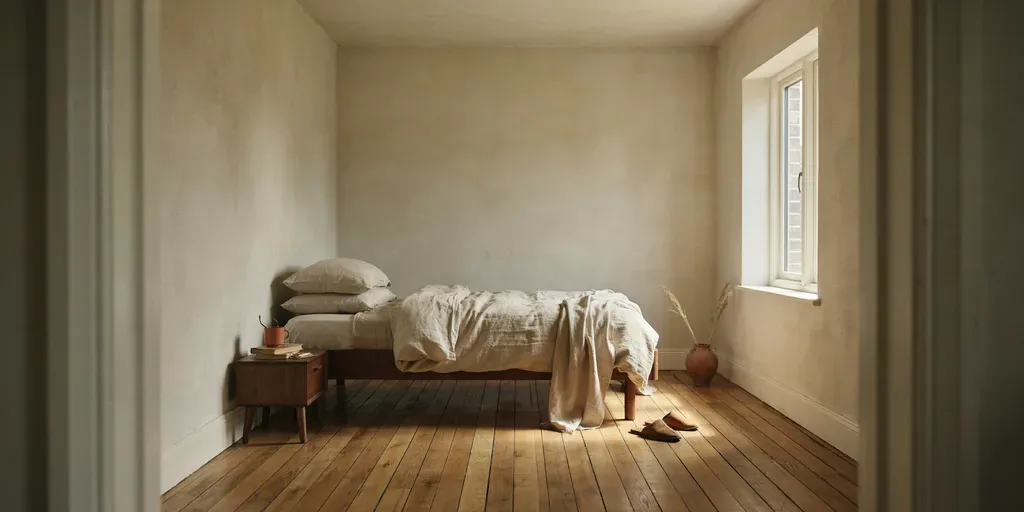
A bed centered on a wall with space on both sides looks best, but it needs about 24 inches on each side to be usable. If the room can’t spare that, push the bed against the long wall. You lose access from one side and gain a whole walkway.
Avoid putting the bed under a window if you can. It’s harder to open the window and the bed sits in a draft in winter.
2. Lights on the wall, not the nightstand
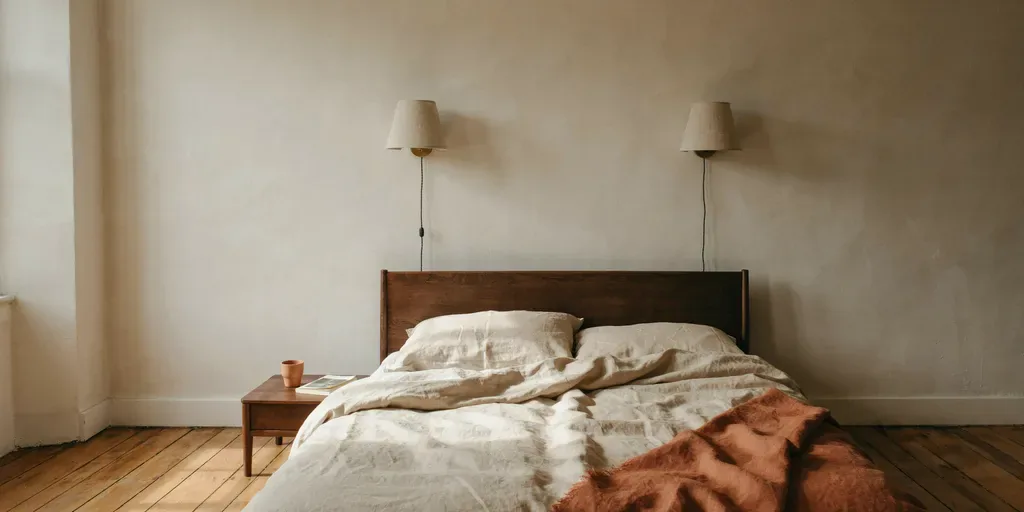
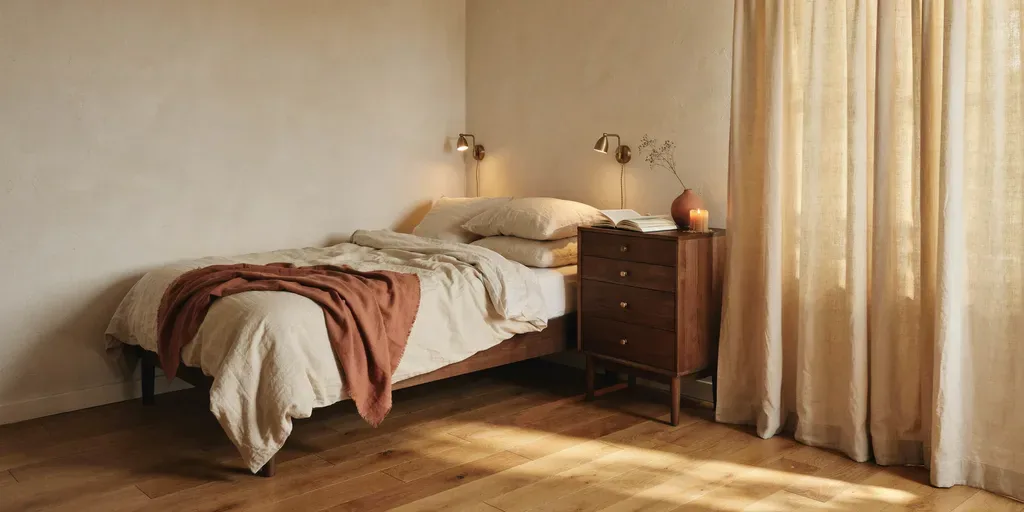
Wall-mounted lights free the nightstand completely. Plug-in sconces with a cord cover don’t need an electrician and can be mounted with two screws. Mount them about 20 to 24 inches above the mattress top so the light falls on a book, not in your eyes.
3. Storage under the bed
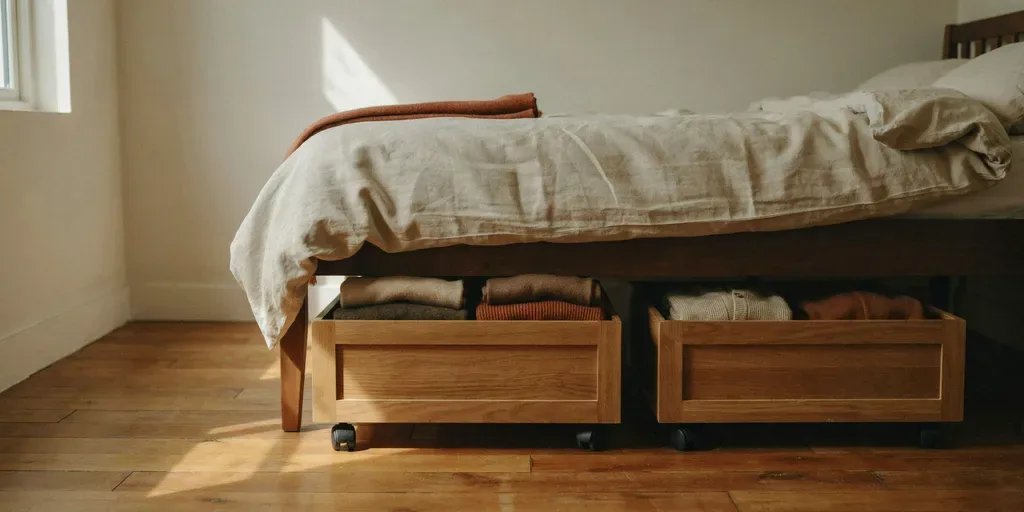
The space under a bed is the largest unused storage in most small bedrooms. Drawers on casters or low lidded boxes hold off-season clothes, spare bedding and shoes. Measure the clearance first; many bed frames have 6 to 7 inches, and bed risers can add a few more.
A bed with built-in drawers is worth considering if you’re buying new.
4. A tall dresser instead of a wide one
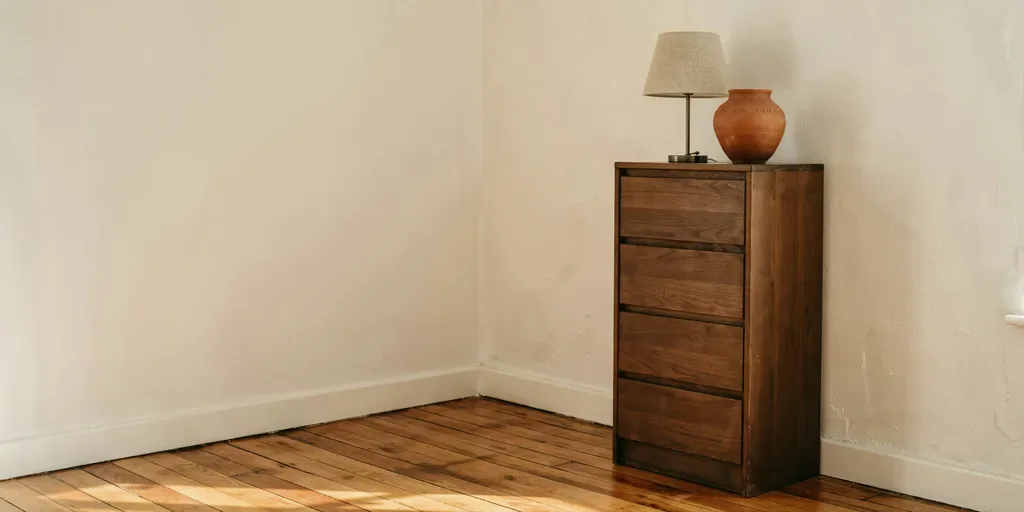
A tall chest of drawers takes up half the floor space of a wide dresser and holds about the same. Put it in a corner where a wide dresser wouldn’t fit. Anchor it to the wall; tall furniture can tip, and anti-tip kits are cheap.
5. A shelf for a nightstand
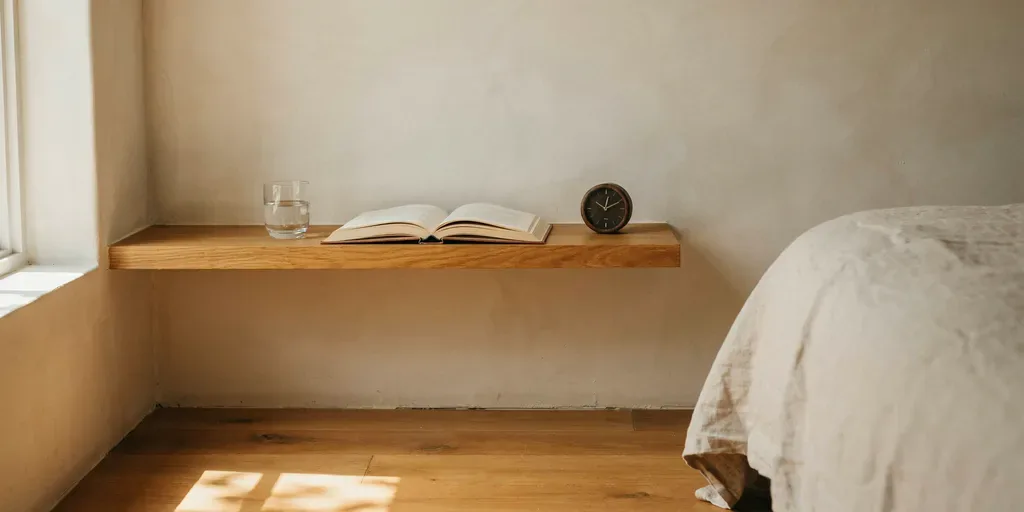
If there’s no room for a nightstand, a small floating shelf beside the bed holds a glass, a phone and a book. About 10 to 12 inches wide and 8 inches deep is enough. Mount it at mattress height or slightly above.
6. A mirror across from the window
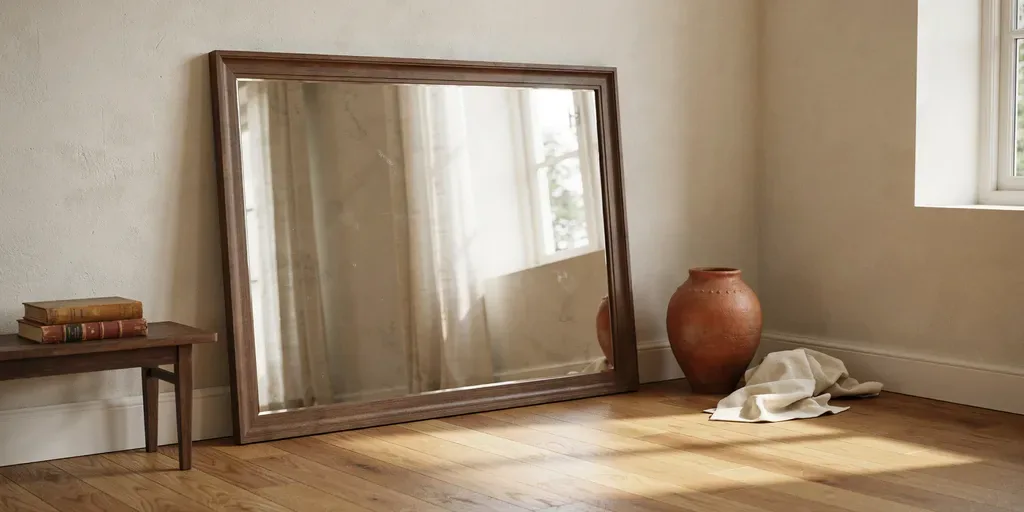
A large mirror opposite or beside a window reflects daylight back into the room and makes it feel deeper. A floor mirror leaning against the wall also replaces a full-length mirror on the closet door. Secure it at the top with a small bracket so it can’t slide.
7. Curtains high and wide
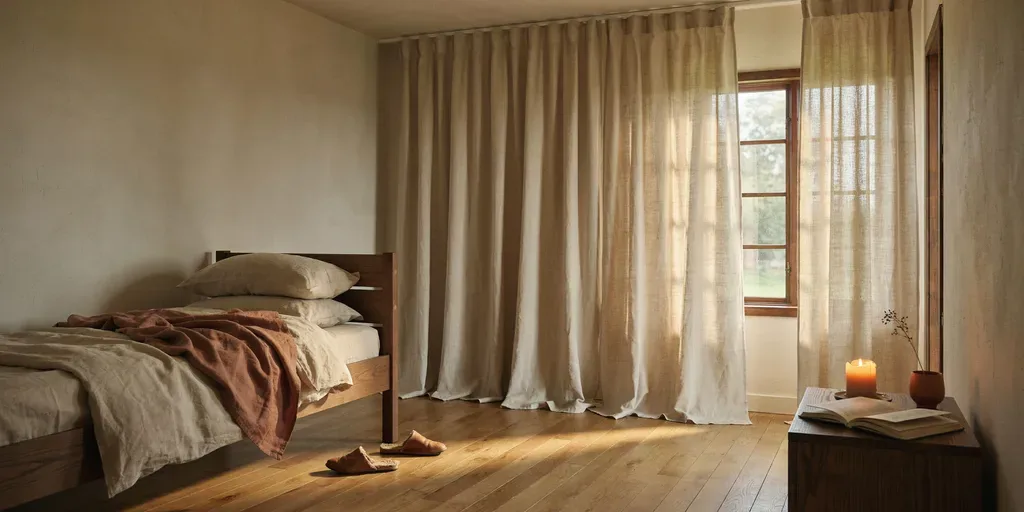
Hang the curtain rod close to the ceiling and extend it 8 to 12 inches past the window frame on each side. The window looks larger, the ceiling looks higher and the curtains don’t block daylight when open. In a bedroom, a blackout lining helps sleep without changing how the curtains look.
8. Stay in one color family
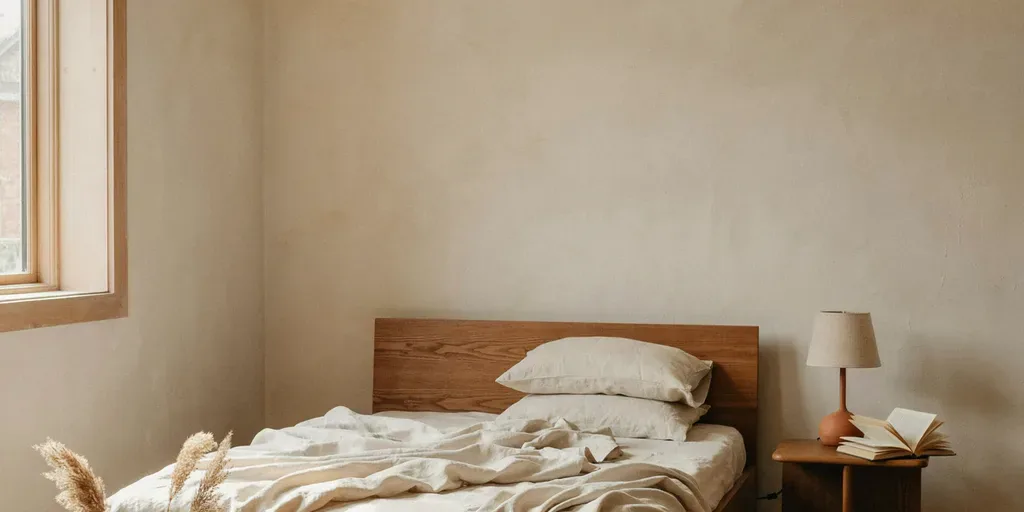
A small room with walls, bedding and curtains in one color family looks larger than one with contrasting colors, because the eye doesn’t stop at each edge. Keep one darker piece, like a walnut dresser or a dark lamp base, so the room has an anchor. Our guide to neutral bedroom decor has palettes that work.
Measuring a Small Bedroom Before You Buy
Most small-bedroom mistakes come from buying furniture before measuring. Write down these numbers before shopping:
- Room dimensions wall to wall, and the ceiling height.
- Door swing: how far the door opens into the room. Nothing can go in that arc.
- Window position and the height of the sill.
- Radiators and outlets, since they limit where the bed and lamps can go.
- Clearances: about 24 inches beside a bed to walk, about 36 inches in front of a dresser to open drawers.
Standard US mattress sizes help with planning: a full is about 54 by 75 inches, a queen about 60 by 80 inches. Add a few inches for the frame.
Then mark the bed and dresser on the floor with painter’s tape and live with it for a day. It’s much cheaper than returning a dresser that blocks the door.
What We Would Skip
A pair of matching nightstands in a room that can’t fit them.
A large headboard with built-in shelving. It takes depth the room doesn’t have.
Dark paint on all four walls of a very small room with little daylight. It can work, but it’s a bigger gamble.
A desk in the bedroom if there’s any other place for it.
Where We Would Start
Bed position, wall lights and under-bed storage. Those three free the most floor space. Then replace a wide dresser with a tall one if you can.
For a bedroom that’s also meant to be restful, our calm bedroom ideas cover light and clutter. And if the small bedroom is part of a small apartment, see our guide to small apartment decorating.
Questions We Get Asked
Where should the bed go in a small bedroom?
Centered on the longest wall if there’s about 24 inches on each side. If not, against the wall, leaving a clear path to the window and door.
How can I make a small bedroom look bigger?
Keep walls, bedding and curtains in one color family, hang curtains high and wide, and put a large mirror near the window.
What size bed fits in a small bedroom?
A full bed fits in many rooms around 9 by 10 feet. A queen needs closer to 10 by 10 to leave walking space.
How do you add storage to a small bedroom?
Use the space under the bed, a tall dresser instead of a wide one, and wall shelves instead of a nightstand.
Can you put a nightstand in a very small bedroom?
A floating shelf or wall-mounted light gives you what a nightstand does without taking floor space.
How much space do you need around a bed?
About 24 inches on any side you walk along, and about 36 inches in front of a dresser so the drawers can open.