12 Minimalist Home Decor Ideas That Are Not Cold
The first time we tried minimalist home decor on a whole flat, we ended up with a room nobody sat in. White walls, one sofa, a concrete lamp, and an echo. It was undeniably tidy. It also felt like a place you would wait in rather than live in, and we quietly put the rugs back within a month.
What we got wrong was treating minimalism as a subtraction problem with no end. Fewer things is only half of it. The other half is that the things that remain have to carry more – more texture, more warmth, more evidence of being used. These twelve are the ones that survived.
Minimalist Home Decor Ideas That Keep the Warmth In
The distinction that matters is between empty and uncluttered. Empty is a room with nothing in it. Uncluttered is a room where everything in it is there on purpose. The second one can be quite full.
1. Cut the number of materials, not the number of objects
Three or four materials across a whole room, each showing up more than once, will read as calm even if there are plenty of things on the shelves. Ten materials in a nearly empty room will not. This is the rule we come back to most often, and we set it out at length in the case for fewer, better materials.
2. Choose materials that age visibly
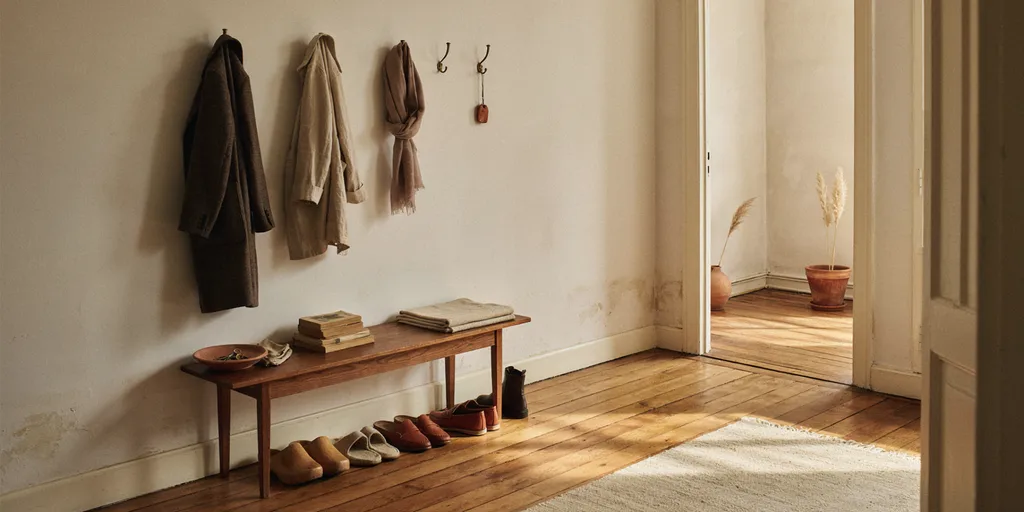
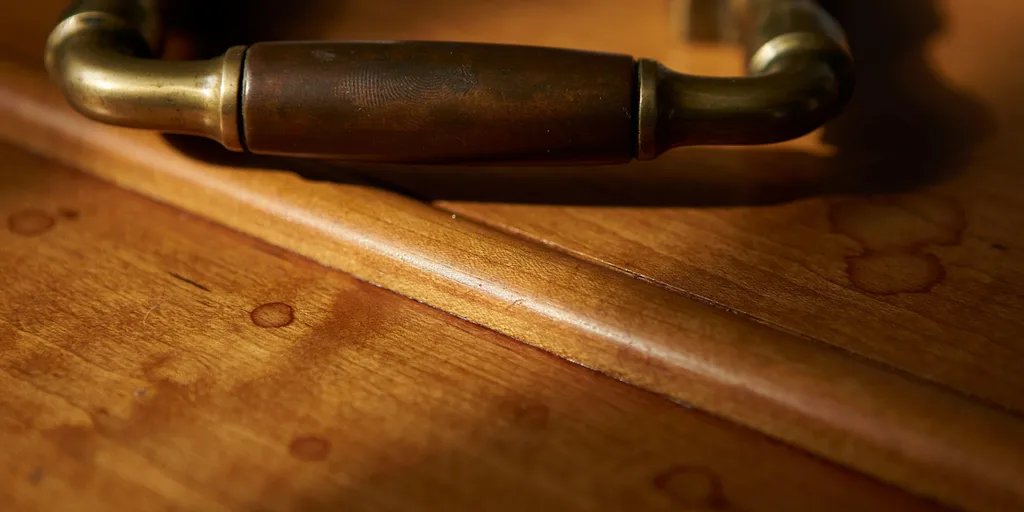
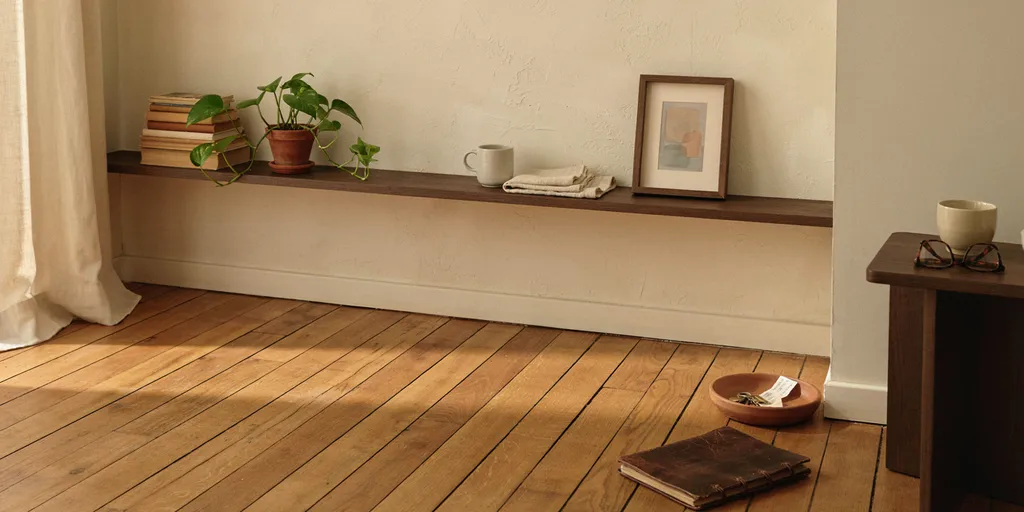
Oiled wood, unglazed clay, linen, leather, brass left unlacquered. They all get better with marks on them. Laminate, powder-coated steel and sealed white surfaces only ever get worse. A minimal room made of things that can only degrade will always feel like it needs protecting.
3. Keep one wall bare and let the others work
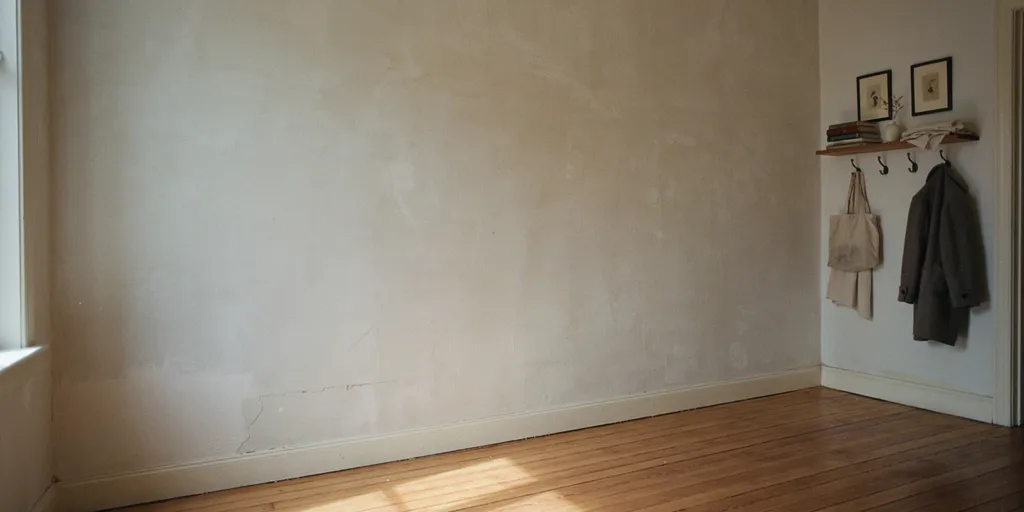
Minimalism that spreads a little of nothing across every wall gives you four half-finished walls. Put the pictures, the shelf and the hooks on one or two, and leave the rest genuinely empty.
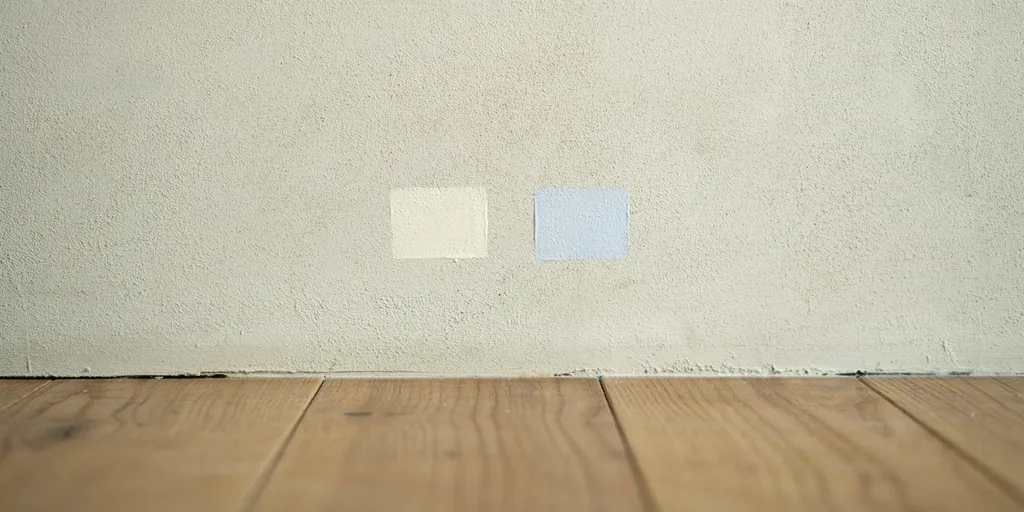
4. Warm the whites
If you are painting white, pick one with something underneath it – a warmth, a touch of yellow or pink. Pure white plus gray daylight is where cold minimalism comes from, and no amount of throws will fix it afterwards.
5. Texture instead of pattern
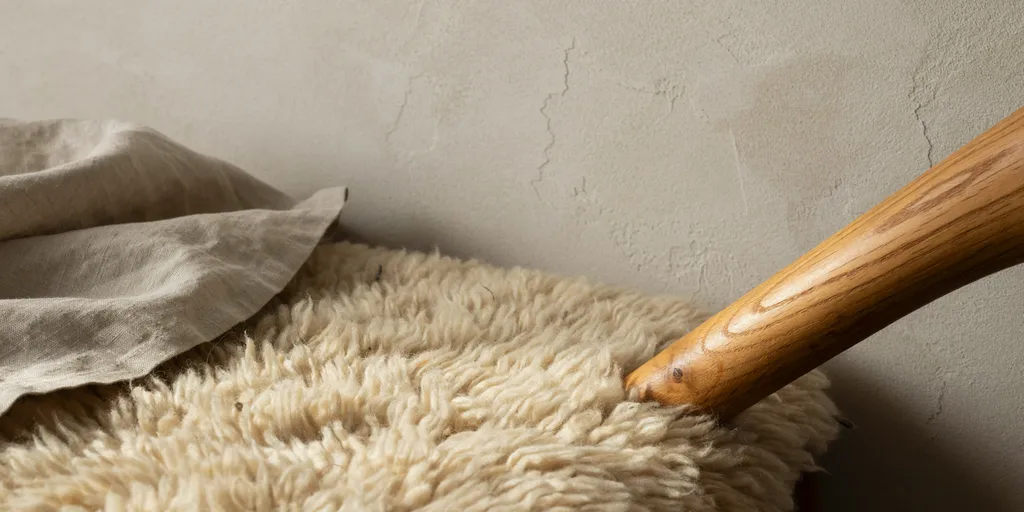
A room with almost no color can still be rich if the surfaces are doing something – a slubby linen, a rug with pile, a rough plaster, a chair with some grain. Texture reads at close range and disappears at distance, which is exactly what you want in a room you want to be quiet from across the room and interesting from the sofa.
6. Let one thing be old
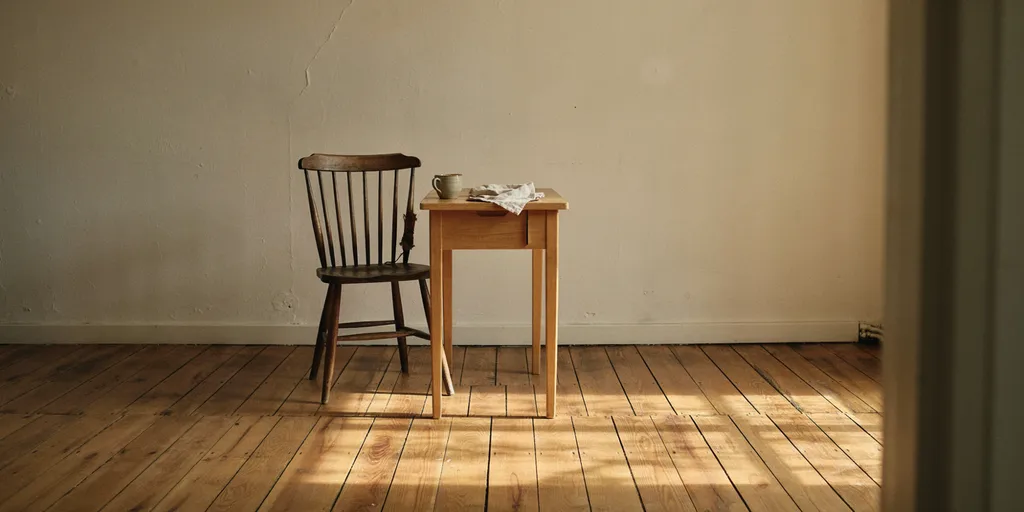
A chair from someone’s house, a table that has been repaired, a rug that came with a history. One object older than the rest of the room stops everything else looking like it was bought on the same afternoon. This is the cheapest way to make a minimal room feel inhabited.
7. Light low, warm, and in more than one place
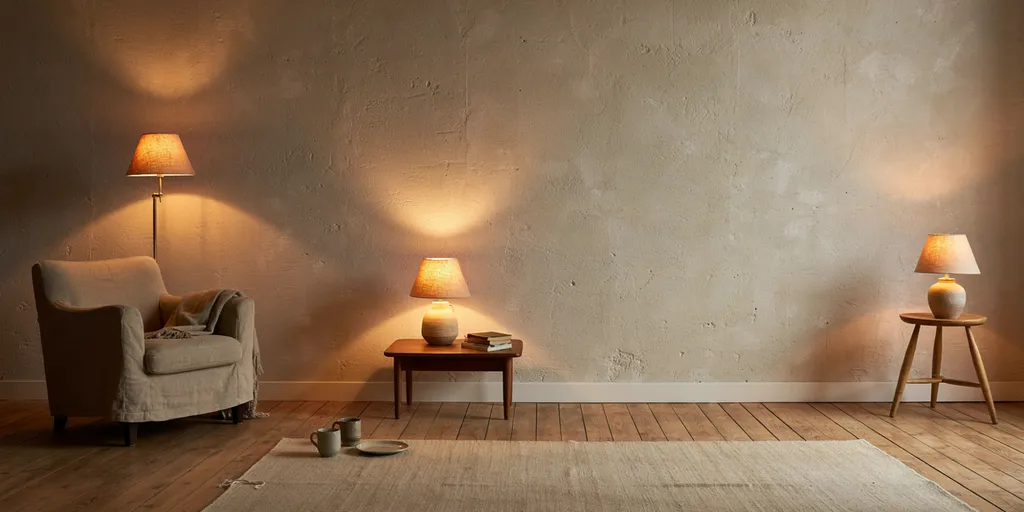
Minimal rooms are often over-lit from above, which flattens texture and makes the emptiness obvious. Two or three lamps below eye level, all the same warmth, and the room gains shadows. Shadows are most of what makes a sparse room feel soft.
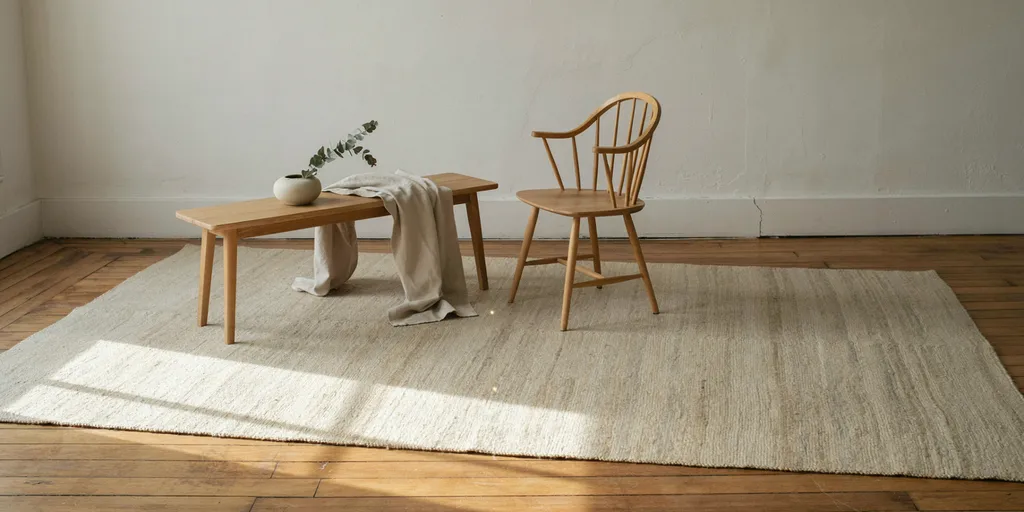
8. Keep the floor soft somewhere
A hard floor plus minimal furniture gives you a room that sounds wrong – every step and every conversation bounces. One large rug solves the acoustics and the warmth together, and it is the single thing we would not remove in the name of minimalism.
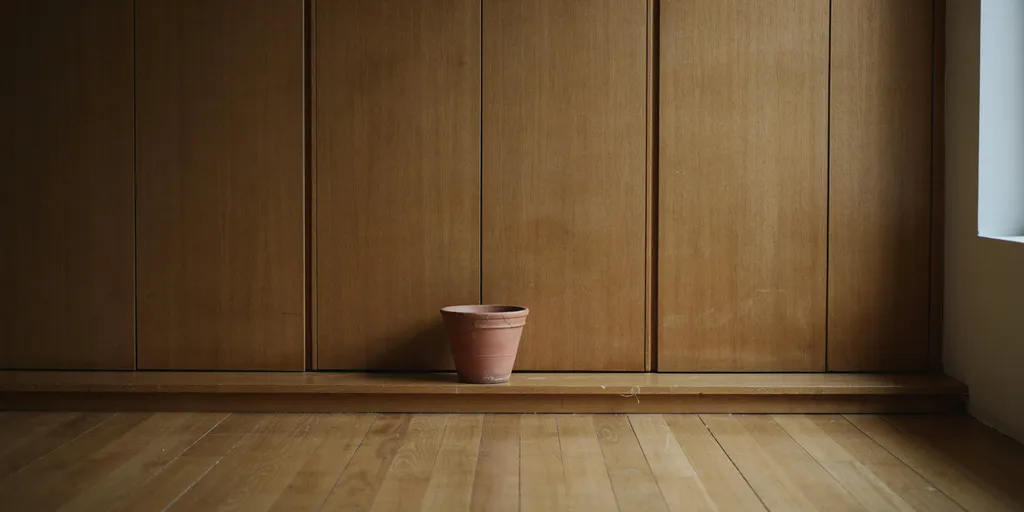
9. Store it, do not display it
The difference between a minimal home and a tidy one is mostly closed doors. Open shelving demands constant curation and quietly turns your possessions into decoration. Closed storage lets you own a normal number of things and still have a quiet room.
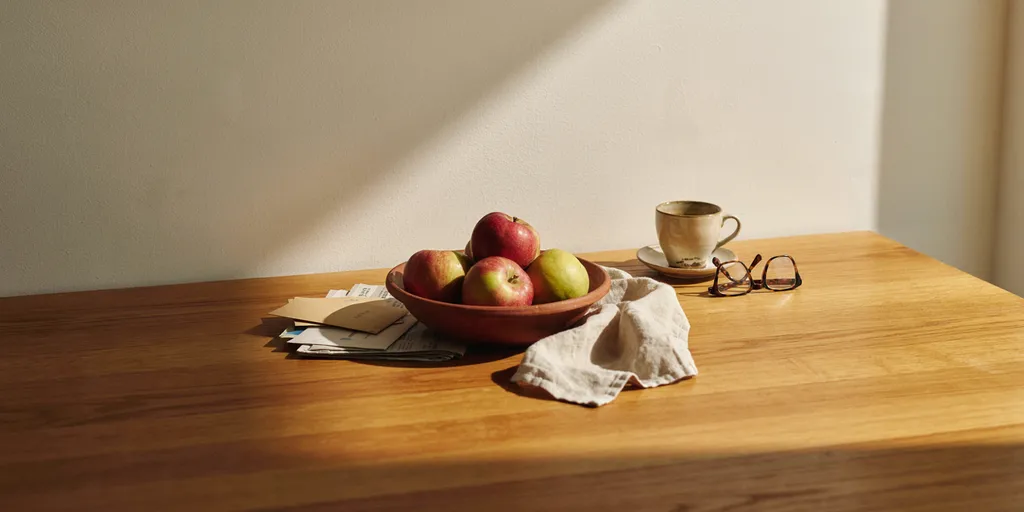
10. Allow one surface to be lived on
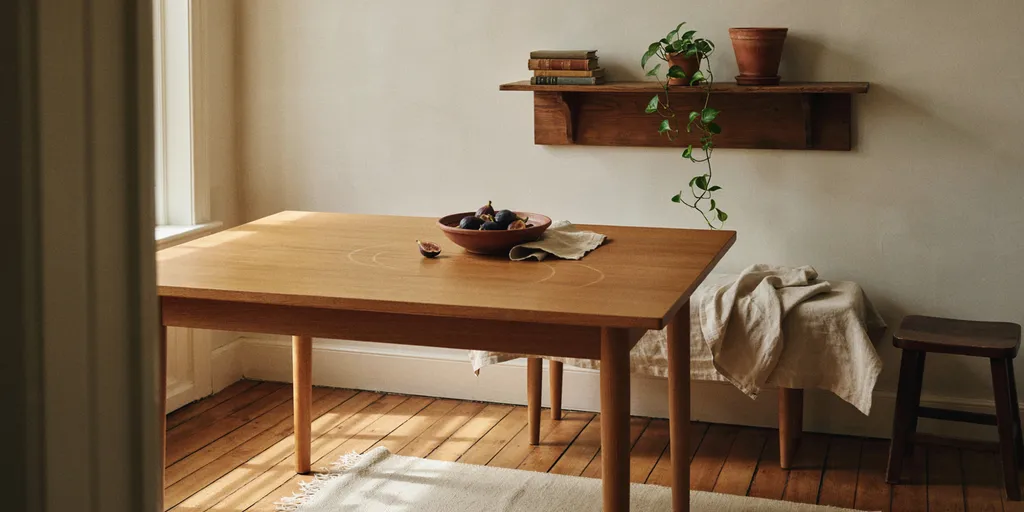
The kitchen table with the bowl of fruit and today’s mail on it. The minimal homes that feel cold are the ones where every surface is at zero, all the time. One surface that is allowed to show what happened today is what makes the rest read as choice rather than rule.
11. Buy slower than you remove
The common failure is emptying a room in a weekend and then filling it with whatever was available. Take things out, live with the gap for a few weeks, and let the room tell you what it is missing. Most gaps turn out not to need filling. Our small living room ideas come from the same approach.
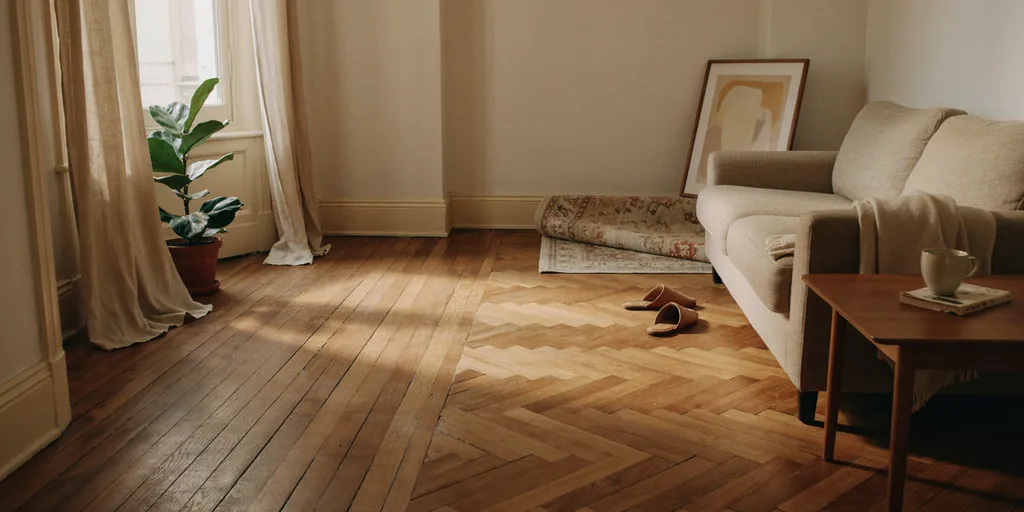
12. Stop before it looks finished
A room that looks complete looks like a showroom. Leaving one wall, one corner or one shelf slightly unresolved is what keeps it feeling like somewhere a person lives. It is also the part that is hardest to do on purpose.
What We Would Leave Out
Capsule everything. Rules about object counts. All-white kitchens with the handles removed. The idea that a minimal home should be cheap to maintain – in our experience it costs more per object and less overall, which is a different thing.
And minimalism as a moral position. It is a way of arranging a room, and it suits some rooms and some people. That is the whole of it.
Questions We Get Asked
How do you make minimalist decor feel warm?
Texture and light, mainly. Keep the palette narrow but make the surfaces do something – linen rather than cotton, oiled wood rather than sealed, wool underfoot – and light the room from several low points rather than one high one. A minimal room with warm light and three good textures does not read as cold, whatever the color is.
Is minimalism the same as having less furniture?
No. A room can have a full complement of furniture and still be uncluttered if the pieces share a small set of materials and nothing is there by accident. Removing furniture from a room with ten competing materials just leaves you with a sparse, busy room.
What is the hardest part of minimalist home decor?
Waiting. The removing is quick and satisfying, and the temptation is to fill the gaps immediately because the room feels unfinished. Most of the good decisions happen after a few weeks of living with the gap.
Does minimalism work with children or pets?
It works better than a decorated home does, in our experience, as long as the minimalism is in the storage rather than the surfaces. Closed cabinets, hard-wearing materials and one rug that can be washed will survive a lot. Open shelving and pale upholstery will not.
Where should I start?
Count the materials in the room you are in. If it is more than five, that is the thing to work on before anything gets thrown away.