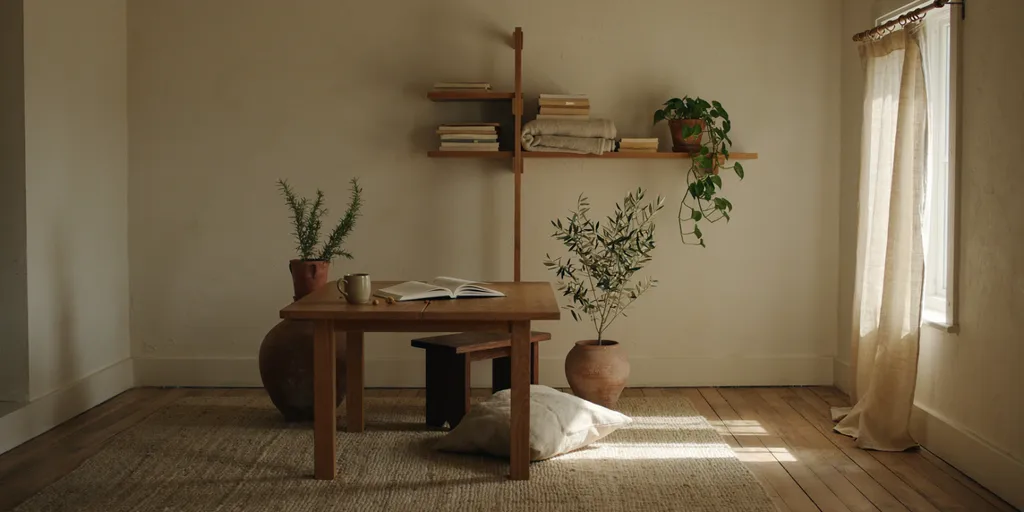
Earthy Home Decor: Fewer, Better Materials
There is a point in putting together earthy home decor where you have chosen the paint, the sofa, the rug, the lamp and the shelf, each one carefully, and the room still does not hang together. We have been in that room several times. The usual diagnosis is that something is missing. In our experience the problem is nearly always the opposite: there are too many different substances in one place.
A room with three materials in it, each turning up more than once, will look composed even if the individual pieces are ordinary. A room with ten materials will look restless no matter how good each one is.
Why Earthy Home Decor Works With Fewer Materials
Material is the thing the eye reads before color and long before style. Wood, stone, wool, clay, glass, steel, plastic – each one has a weight, a temperature and a way of taking light. When a room contains a lot of them, there is no relationship for the eye to find, and the room reads as accumulation. That is true whether the accumulation happened over ten years or in one weekend at a furniture warehouse.
Narrowing the list does two things. It makes the room coherent, and it makes future decisions easy, because most purchases answer themselves.
Aging well is a property you can check
This is the practical test, and it is more useful than any question about style. Will this look better, worse, or the same in five years of ordinary use?
Materials that improve, or at least hold: oiled and waxed wood, unglazed ceramic, linen, wool, leather, brass and copper left unlacquered, lime plaster, stone. They take marks and the marks become part of them.
Materials that only degrade: laminate, veneer thin enough to chip, powder-coated white metal, sealed matt surfaces that show every wipe, most printed textiles, anything described as scratch-resistant. They arrive at their best and go downhill from there, which means the room needs protecting rather than using.
Neither list is a moral judgement. But a home made of the second list will always feel slightly provisional, because every mark on it is damage.
A short list we keep coming back to
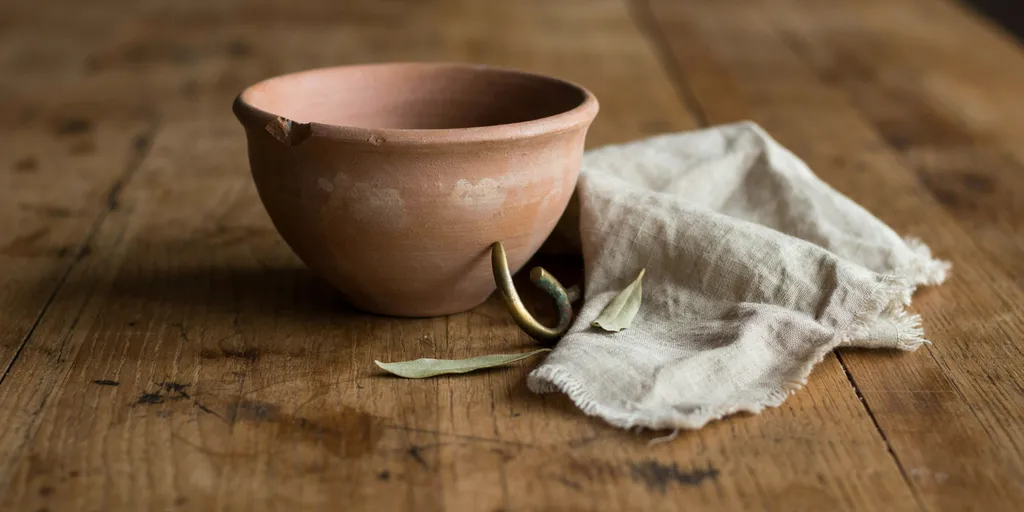
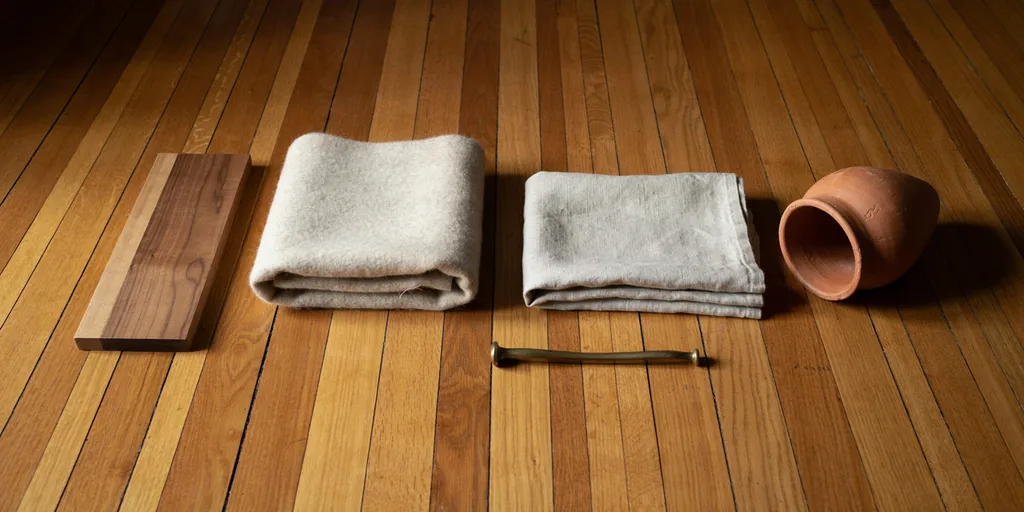
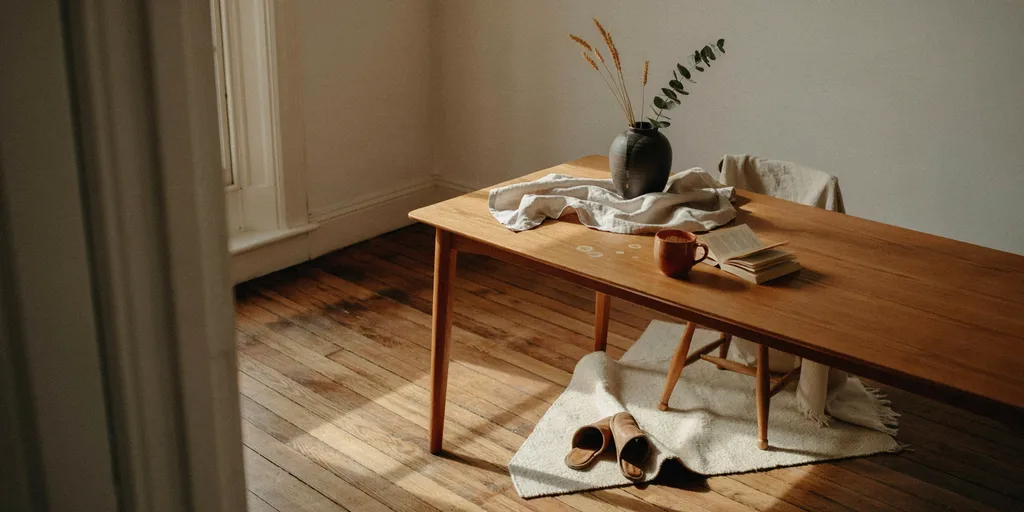
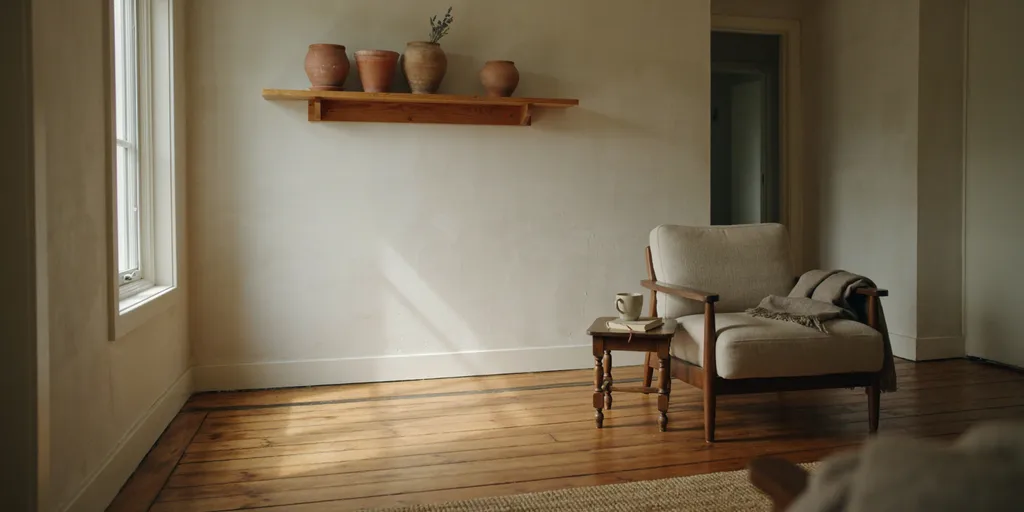
Wood, oiled rather than lacquered. Wool for anything underfoot. Linen for anything that hangs or covers. Unglazed clay for the things that sit on surfaces. That is four, and between them they cover almost everything in a room that is not a wall.
Then one metal, chosen once and used throughout – handles, lamp bases, hooks, faucets if you get the choice. The single most common material mistake we see is three metals in one room, each from a different purchase.
Repetition is the whole mechanism
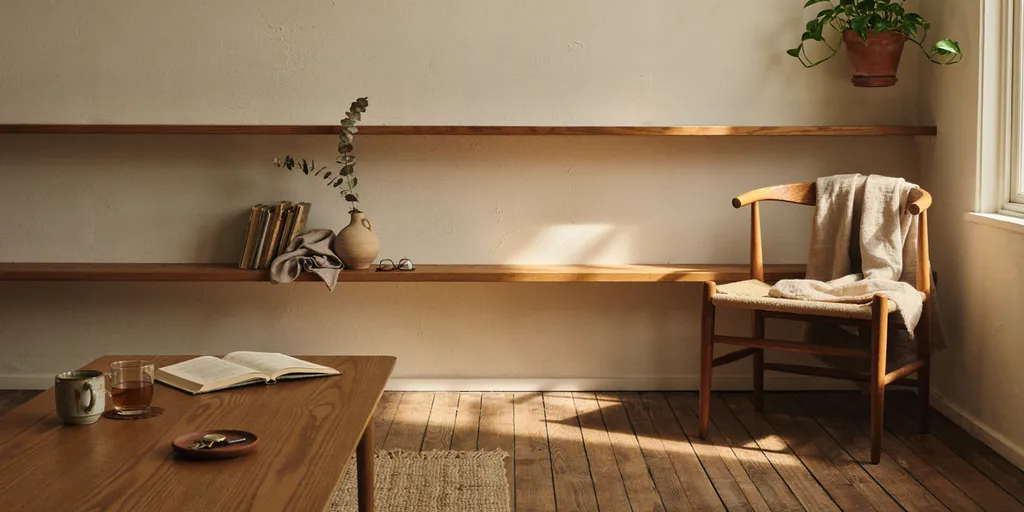
One wooden thing in a room is a wooden thing. The same wood in the table, the shelf and the bed frame becomes the room’s material. The rule is not that everything must match – it is that each material should appear at least twice, in different places and at different sizes.
This also makes second-hand shopping workable. You are not looking for a piece that matches your furniture, you are looking for a piece in a material the room already speaks.
Color follows material
Once the materials are settled, most of the color is decided for you. Oiled oak, wool, unbleached linen and clay give you a palette without anyone choosing one. What is left is whether to add a single color on top, and usually the answer is one, repeated three times.
Rooms that start with a color scheme and then look for materials to fit it tend to end up with materials chosen for their tone rather than their behavior – which is how painted furniture and cool gray textiles get into a house.

Where to spend and where not to
Spend on the things you touch and the things that are large: the floor covering, the seat you sit in every day, the table surface, the door handles. Those are where cheap material is felt rather than seen.
Do not spend on decorative objects in good materials. A ceramic bowl from a market and one from a gallery do the same work in a room, and the room cannot tell the difference from two meters away.
Give it time
A material palette narrows over years, not over a weekend. The way it happens in practice is that you stop replacing like with like – when the laminate side table goes, the next one is wood; when the synthetic rug wears out, the next one is wool. After a few rounds the room has a short list without anyone having drawn one up.
What We Would Skip
Accent walls in a different finish. Faux materials of any kind, including wood-effect flooring, which fails the aging test twice over. Mixed metals presented as a deliberate look. And material palettes copied from somewhere with completely different light – what works in a bright, dry climate often goes cold and hard in a northern flat.
Questions We Get Asked
How many materials should a room have?
Three or four, plus one metal, each appearing at least twice. That is enough range for a room to be interesting and few enough for it to read as one thing. Very large open spaces can carry a fifth.
Which natural materials age the best?
Oiled wood, wool, linen, leather, unglazed clay, stone, and unlacquered brass and copper. All of them take marks in a way that reads as use rather than damage. The test to apply to anything else is simple: imagine it with a scratch on it.
Is earthy home decor expensive?
Per object, often yes. Over time, usually not, because the failure mode of cheap material is replacement rather than repair. The way to make it affordable is to buy less and to buy second-hand, which is easier once the material list is short enough that you know what you are looking for.
What about rentals where you cannot change the floor?
Work with what is fixed rather than against it. A large wool rug will cover most of a bad floor and set the material for the room, and everything above floor level is yours to decide. It is also the reason we would put the rug first in a rental.
Where should I start?
Count what is in the room you are sitting in. If the number is over six, the next thing that leaves the house has already been chosen for you. The room-by-room version of this is in our minimalist home decor notes.