Winter Decor Ideas for the Home That Last Until March
Winter decorating usually means one of two things: Christmas, or nothing. Once the tree comes down in January, a lot of rooms go straight back to their summer setup, and they feel cold for the next two months.
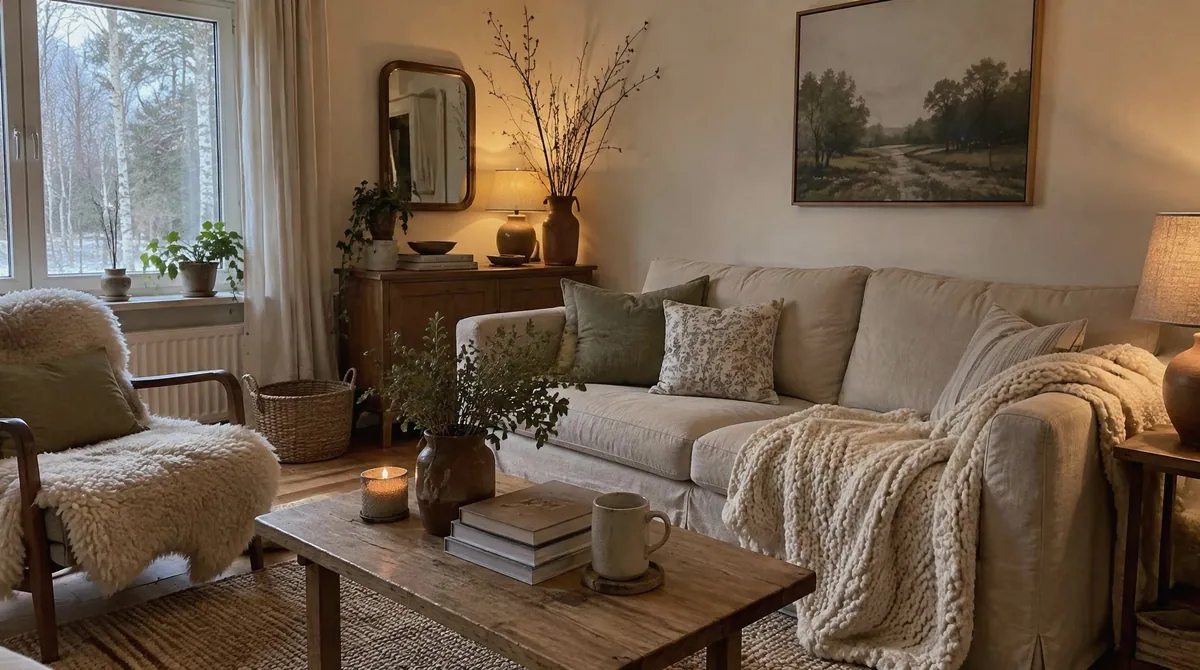
Winter decor doesn’t need to be seasonal in the holiday sense. It’s about weight, warmth and light: heavier fabrics, softer surfaces, lamps on earlier, a few natural things brought in from outside. Done that way, it goes up in November, sits quietly behind the Christmas decorations in December and carries the room through to March.
Winter Decor Ideas for the Home Start With Texture and Light
Winter light is low, short and gray. A room that looks fine in June can look flat by four in the afternoon in January. The two things that fix that are texture, which gives the eye something to rest on, and warm light from several low sources.
Everything below falls into one of those two groups, and none of it needs new furniture.
1. Bare branches instead of flowers
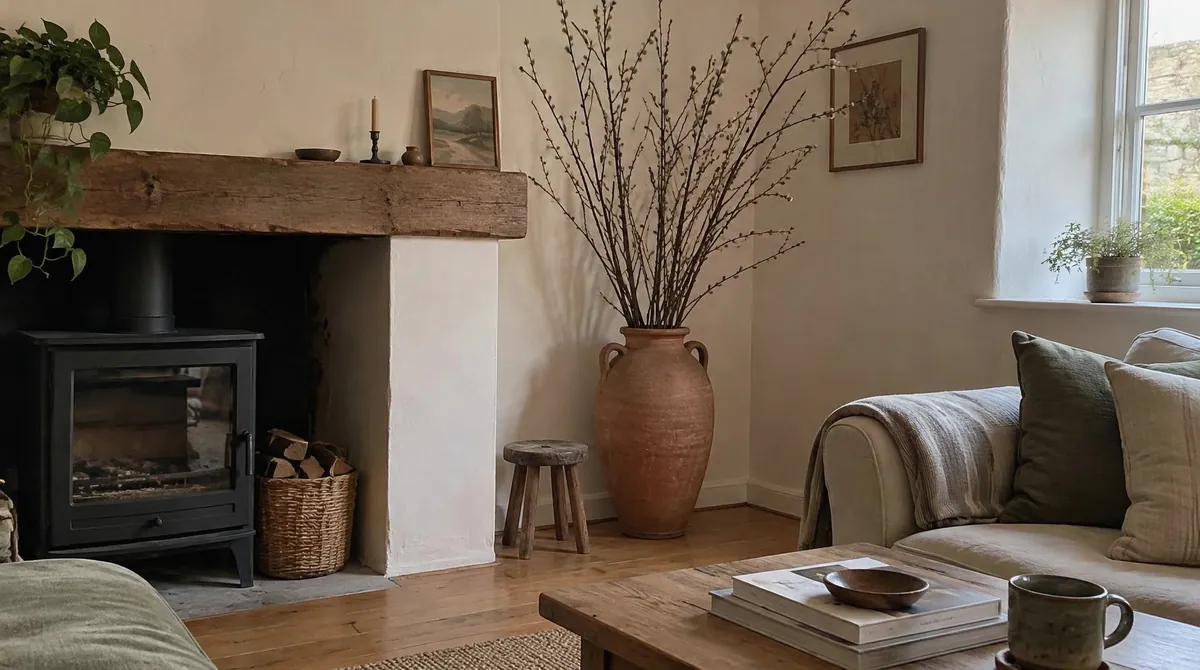
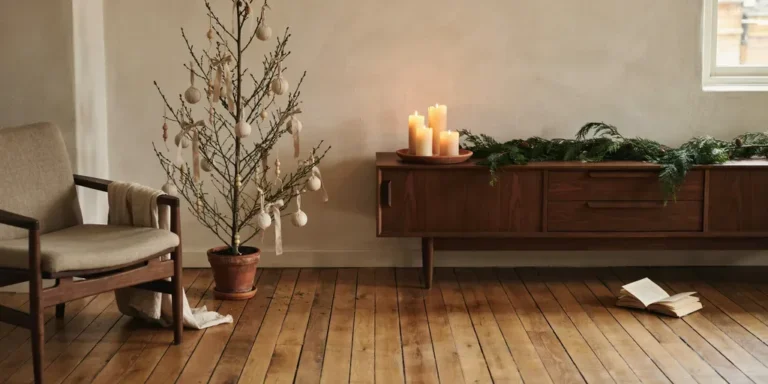
Fresh flowers are expensive in winter and last a week. A few bare branches in a heavy jug last all season and cost little or nothing. Birch, willow, dogwood and dried hydrangea stems all work.
Go tall. Branches look best when they reach well above the jug, roughly twice its height, and when there are fewer of them than you’d think. Five or six stems in a floor jug fill a corner better than twenty crowded together.
2. Sheepskin on the cold seats
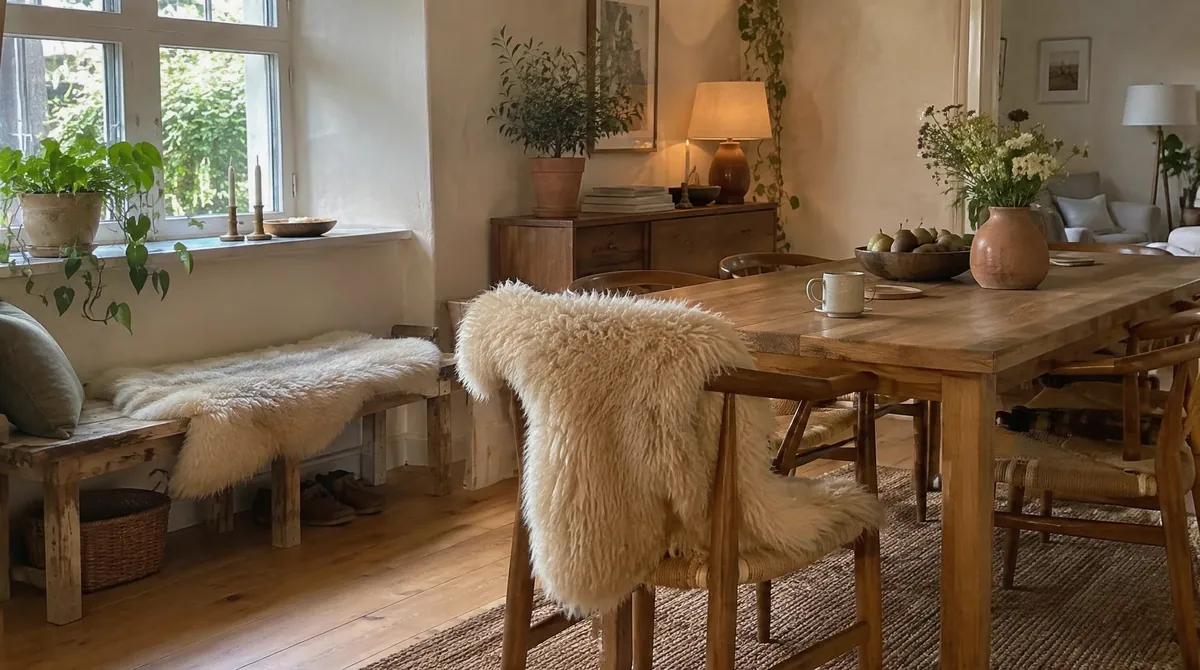
Wooden chairs, benches and window seats are the coldest places to sit in winter. A sheepskin or a faux sheepskin thrown over them changes that immediately, and it adds a soft surface that catches the light.
Put them where people actually sit: dining chairs, a reading chair, the bench by the door. One or two is enough for a room.
3. Heavier throws
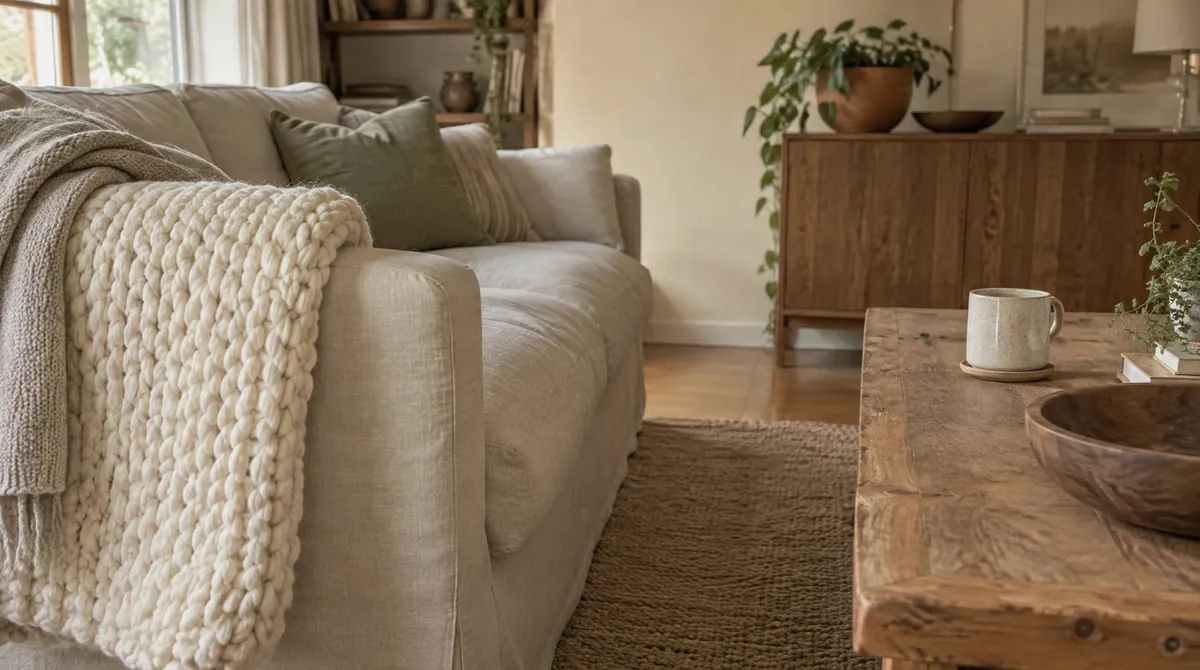
The lightweight cotton throw that works in summer looks thin in winter. Swap it for something with weight: chunky knit wool, a heavy woven blanket, boiled wool or a quilt.
Keep the colors close to what’s already in the room, so the swap reads as a change of season rather than a new scheme. Cream, oatmeal, gray and warm brown work almost anywhere. One throw on the sofa and one folded in a basket is plenty.
4. Lamps on earlier
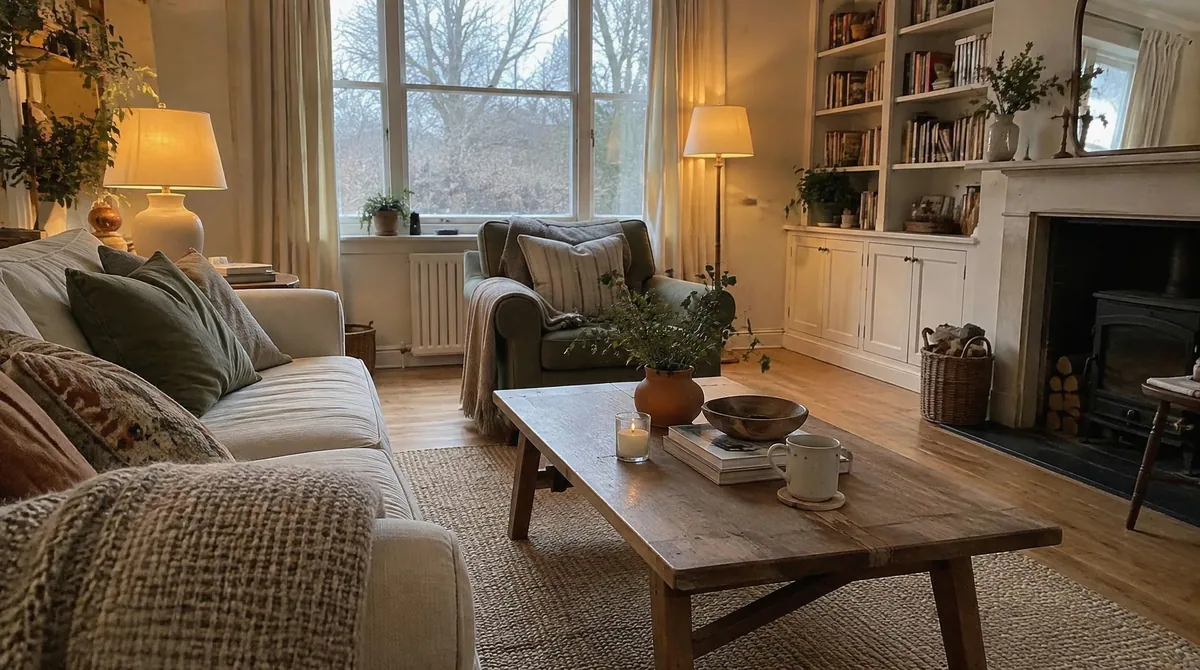
In winter, the overhead light comes on as soon as it gets dark, and it flattens everything. Turn on table and floor lamps instead, and turn them on earlier, around the time the light at the window starts to go gray.
Use warm bulbs around 2700K. Three lamps at different heights, one low, one at table height and one taller, light a room more evenly than a single ceiling fixture. If switching them on is a chore, plug them into smart plugs or simple timers.
5. Candles in hurricane glasses
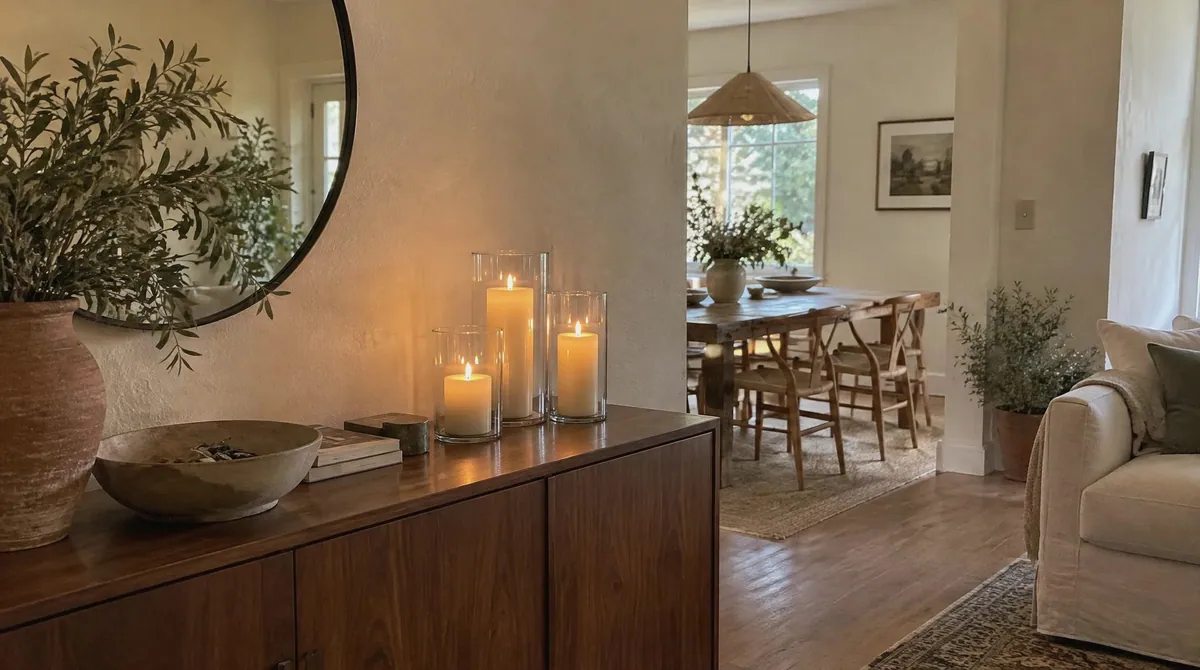
Candles do more in winter than any other single thing, and hurricane glasses make them safer and calmer: the flame doesn’t flicker in drafts, and it’s shielded from throws and curtains nearby.
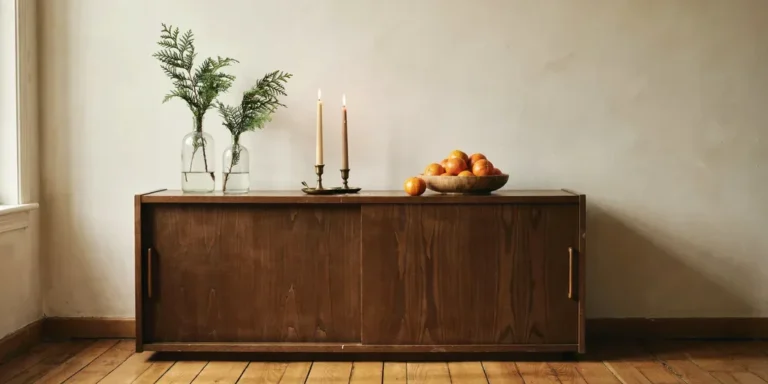
Group three of different heights on a sideboard, a dining table or a windowsill away from curtains. Never leave them burning unattended. If you have pets or children, good LED pillar candles in the same glasses look almost the same from across the room.
6. Pine cones and greenery in a bowl

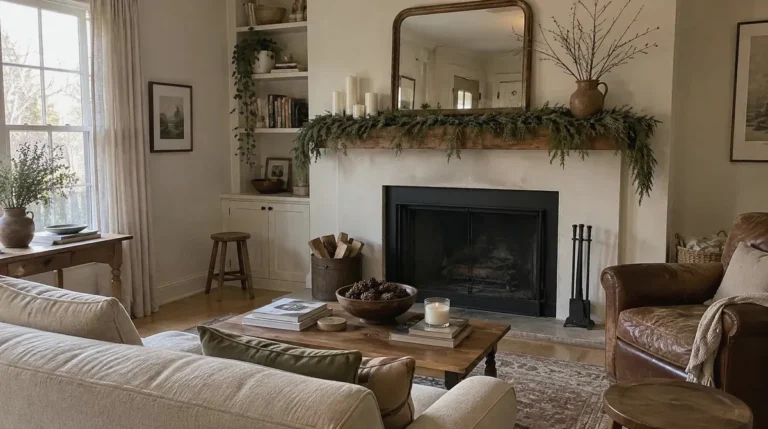
A wide bowl of pine cones on a coffee table is one of the simplest winter details, and it works long after Christmas. Add a few sprigs of cedar or pine in December, and take the greenery out once it dries.
If you collect cones outside, bake them on a lined tray at a low oven temperature, around 200°F, for about 30 minutes to dry them out and clear any insects. Stay close while they’re in the oven.
7. Wool and flannel bedding
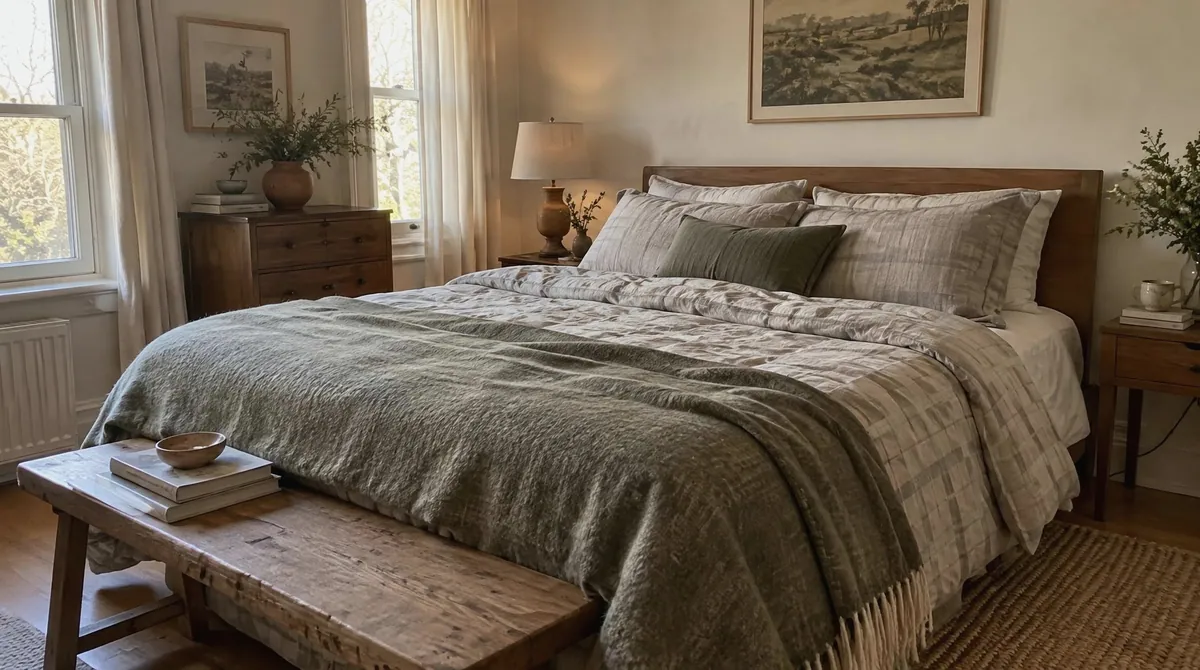
Bedding is the biggest textile in most homes, so changing it changes the room more than anything else. Flannel sheets or a flannel duvet cover feel warm from the first minute, and a wool blanket folded at the foot of the bed adds weight without another heavy duvet.
Choose muted colors that sit with the rest of the room: gray, cream, oatmeal or a quiet check. Our ideas for neutral bedroom decor work well as a base for this.
8. A winter landscape print
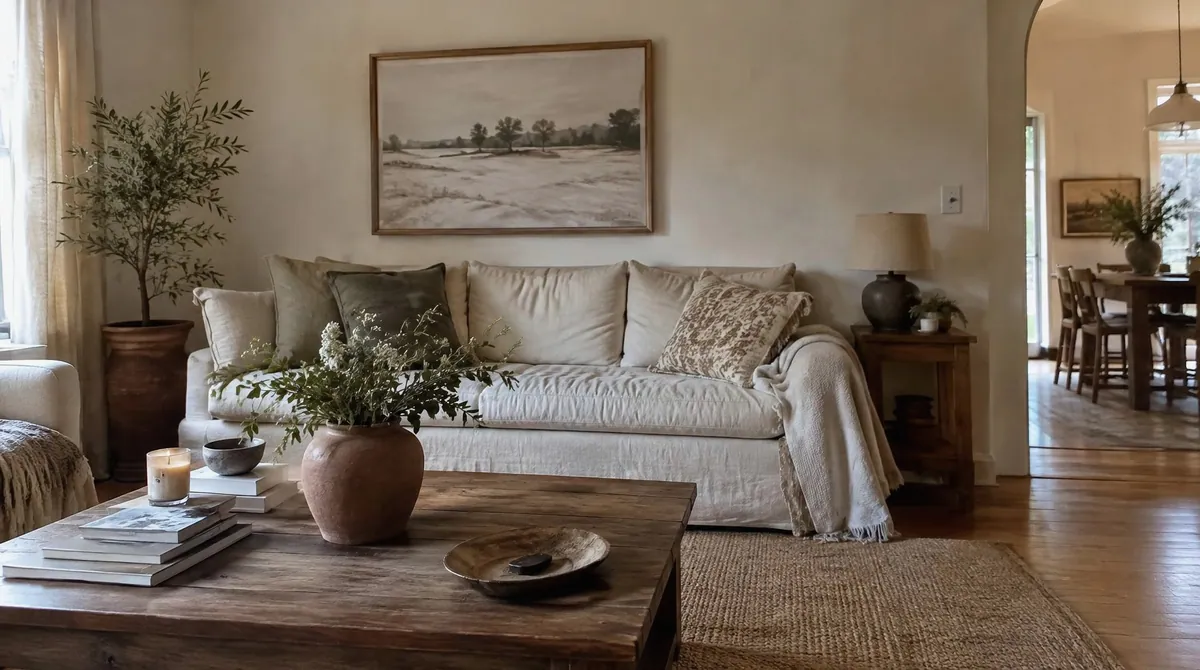
One piece of art can carry the season. A muted winter landscape, a snowy field, a bare tree or a frosted window, hung where you usually have something brighter, shifts the mood of the room without adding anything else.
Swap it in November and back in March. Keeping two pieces in rotation means the wall never feels like a permanent fixture you’ve stopped seeing.
A Winter Room in One Afternoon
If you want to do all of this at once, this order avoids moving things twice:
1. Bedding: change it first, since it takes the longest. 2. Textiles: swap throws, add sheepskins to the cold seats. 3. Lamps: move them where they’re needed and check the bulbs. 4. Natural things: branches in a jug, pine cones in a bowl. 5. Candles and art: last, once the room is set.
Most of it comes out of a closet. The rest is a walk outside and a few new bulbs.
What We Would Skip
Snowflake decals, “Let it snow” signs and anything with glitter. They date quickly and say winter louder than it needs to be said.
Faux snow on branches. Bare wood looks better and doesn’t shed.
Replacing furniture or repainting for the season. Winter decor is meant to come down again in spring.
Strong scented candles in every room. One scent in the room you use most is enough.
Where We Would Start
Lamps and a heavier throw. Those two changes make the biggest difference for the least effort, and the rest can follow over the next few weekends.
The same ideas carry through a whole warm neutral living room, and if you have a corner for reading, our cozy reading nook ideas fit a winter room naturally.
Questions We Get Asked
How do I decorate my home for winter after Christmas?
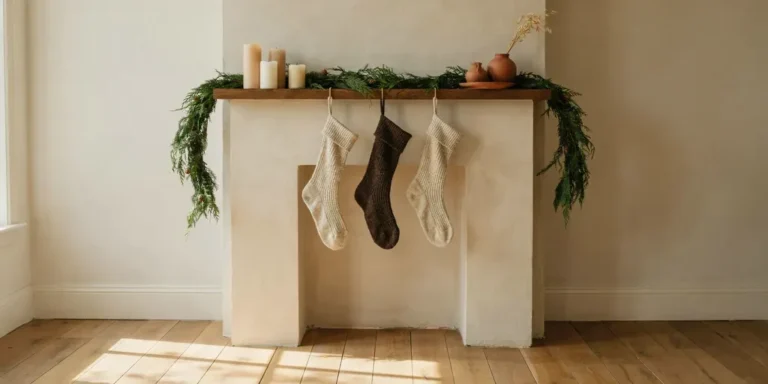
Take down the holiday-specific pieces, such as ornaments, stockings and red and green accents, and leave the rest: branches, pine cones, candles, throws and warm lighting. That carries the room through January and February.
What colors work for winter decor?
Muted, warm neutrals: cream, oatmeal, gray, warm brown, charcoal and soft green. They look calm in low winter light and work with most existing rooms.
How can I make my home feel cozy in winter on a budget?
Turn on lamps instead of overhead lights, move the heavier throws and blankets you already own into the living room, collect branches and pine cones outside and group a few candles. Most of it costs little or nothing.
When should I put up winter decor?
Early to mid November works well. It sits under the Christmas decorations in December and stays up after they come down, usually until March.
Is it safe to bring pine cones inside?
Yes, if you dry them first. Bake them on a lined tray at around 200°F for about 30 minutes and stay close while they’re in the oven. This dries out sap and clears any insects.
What’s the difference between winter decor and Christmas decor?
Christmas decor is tied to the holiday: trees, ornaments, stockings. Winter decor is about the season: texture, warmth and light. It can start before Christmas and last well after.